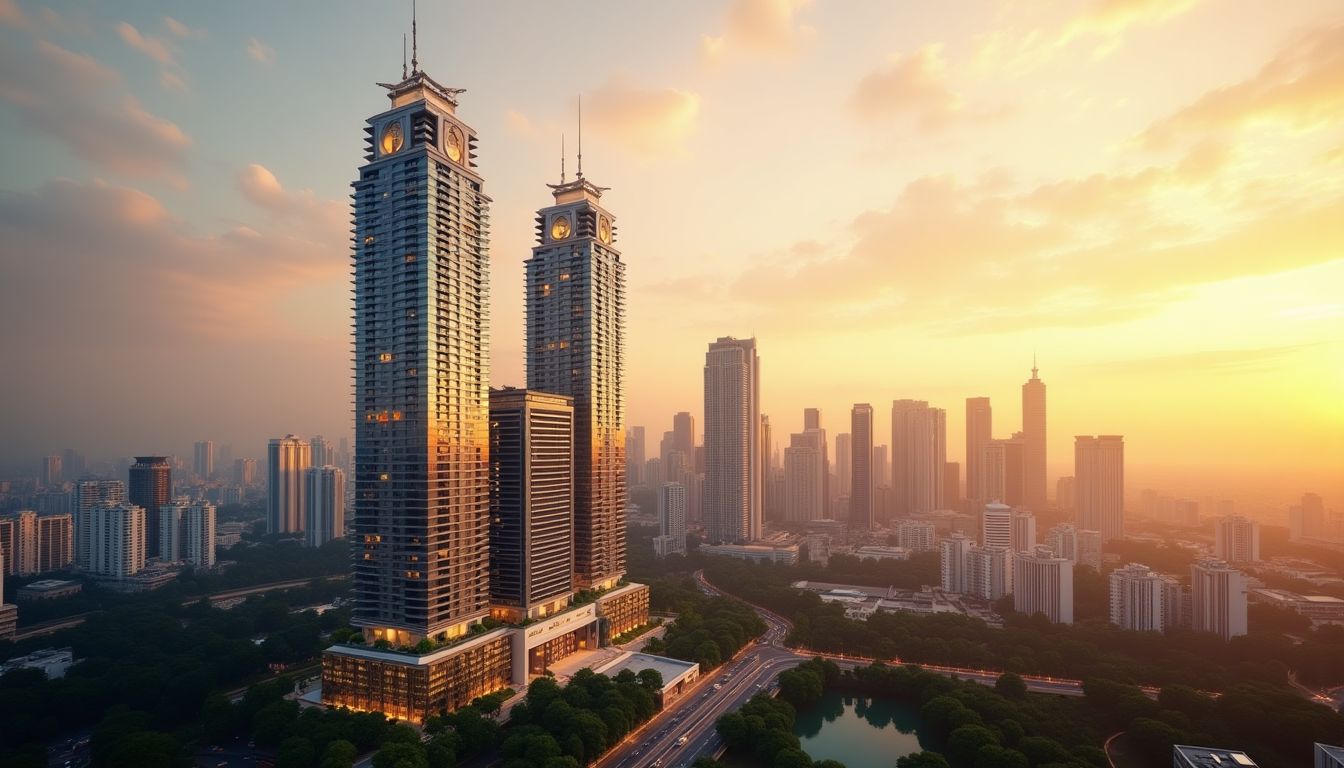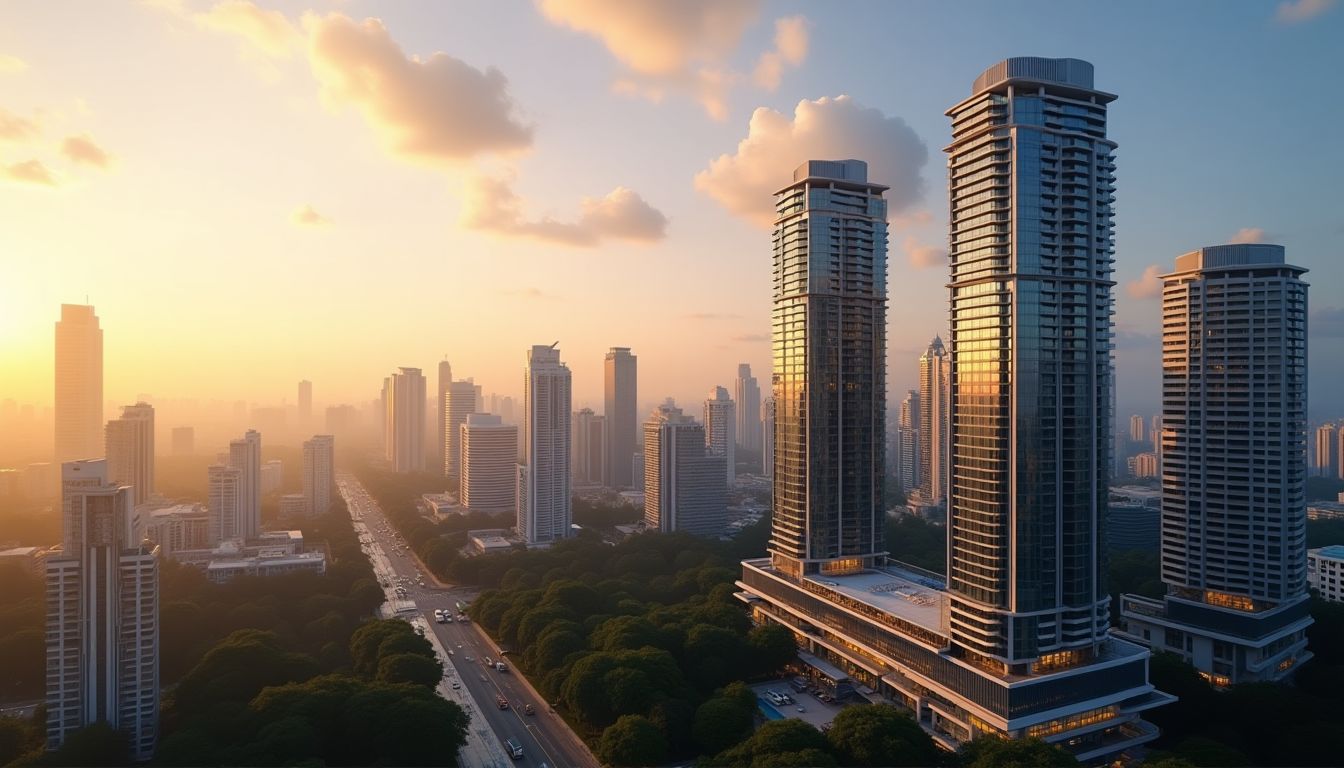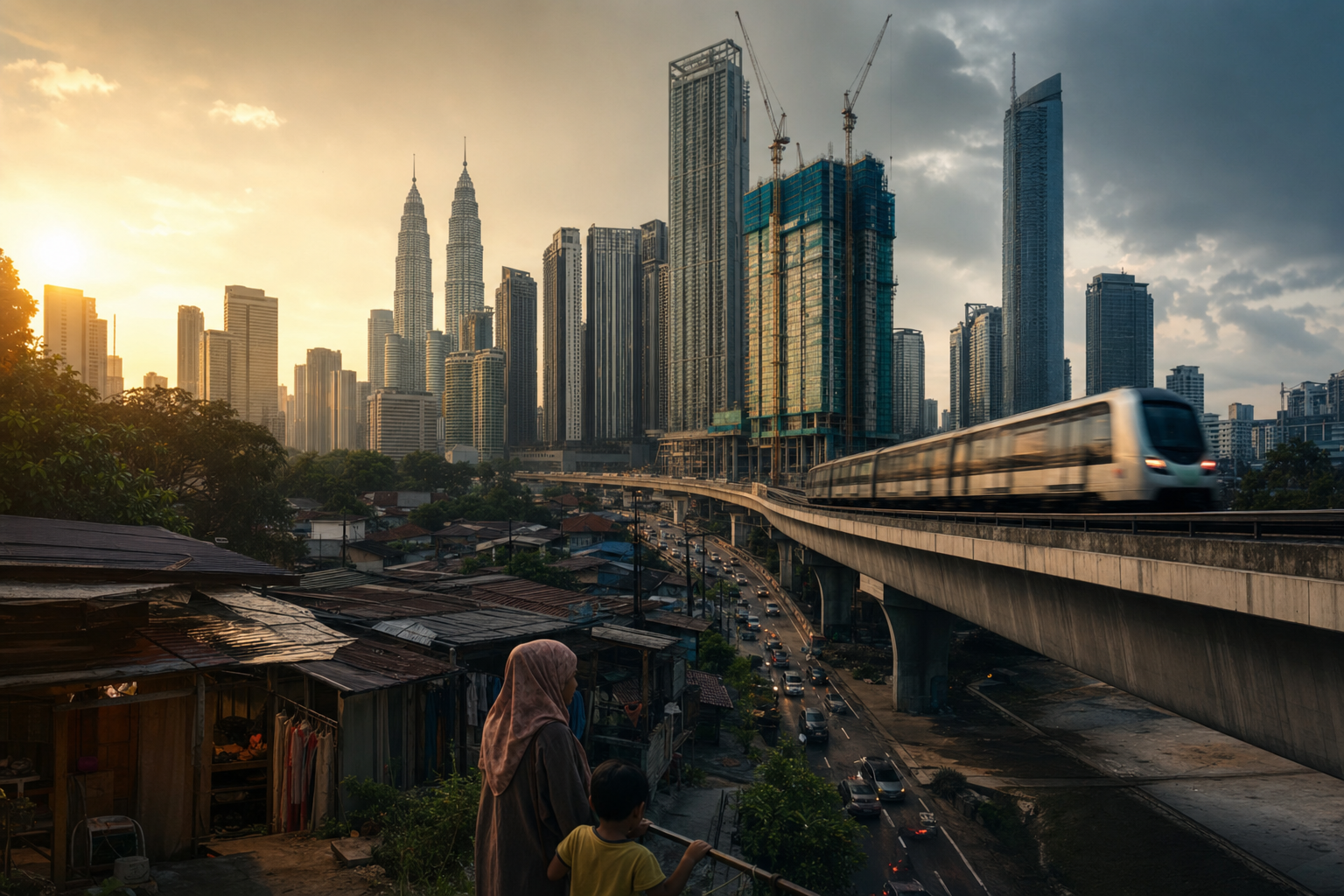
Big capital is concentrating in Malaysia's property corridors at a speed not seen in a decade — but the geography of that bet tells a more specific story than the headlines admit.
RM80,000,000,000. That Number Deserves a Full Stop.
Genting Property's announcement of an RM80 billion Johor Tech Smart City in Kulai is not a property story. It is a capital allocation thesis — one that tells you precisely where institutional confidence in Malaysian land is pooling in mid-2026. Stack that alongside IJM Land and MRT Corp's RM600 million Cochrane TOD, The Linque, integrated directly with an MRT station in Kuala Lumpur, and the pattern sharpens: Malaysia's property industry in 2026 is not experiencing broad-based growth. It is experiencing concentrated, infrastructure-anchored growth — and the distinction matters enormously for anyone trying to read where values are heading.
According to transaction data tracked by NAPIC, residential overhang has been a persistent drag on sentiment for several years. What is shifting now is the quality and specificity of new supply entering the market. Developers are not building generically — they are building at nodes.
The TOD Thesis Is No Longer Theoretical
Transit-Oriented Development has been a planning aspiration in Malaysia for the better part of fifteen years. In 2026, it is a commercial reality with eight-figure price tags attached. The Linque at Cochrane — developed by IJM Land in partnership with MRT Corp — is the clearest single-project signal of this shift. A RM600 million integrated development physically connected to an MRT station is not a niche product. It is a direct bet that Kuala Lumpur's transit infrastructure has matured enough to command a sustainable premium.
The logic is empirical. Properties within a 500-metre radius of MRT stations in the Klang Valley have, according to listings data aggregated by iProperty, consistently transacted at a 12–18% premium over equivalent stock located beyond that threshold. The Linque is engineering that premium into its cost structure from day one.
What this signals to the broader market: developers with land banks adjacent to confirmed transit routes — Gamuda, Mah Sing, and SP Setia have all flagged TOD-proximate projects in recent quarterly reports — are sitting on assets that the 2026 infrastructure pipeline is actively repricing upward. The risk is concentration: if MRT ridership growth plateaus before these projects reach stabilised occupancy, the premium calculus unravels quickly.
Branded Living and the Luxury Redefinition
Separate from the TOD story, but running in parallel, is a structural change in what the upper end of Malaysia's residential market is actually selling. The rise of branded residences is adding measurable value to Malaysia's luxury property landscape — not through location alone, but through brand equity attached to the physical asset. Internationally affiliated branded residences in KLCC and Mont Kiara are transacting at premiums of 20–35% over non-branded comparable units, according to EdgeProp's market tracking.
This matters beyond the luxury segment. Branded living is functioning as a price anchor — it sets a ceiling that redefines what 'aspirational mid-market' looks like one tier below. Sunway's integrated township model, which has long bundled lifestyle infrastructure (universities, hospitals, malls) into its residential proposition, is arguably the domestic precursor to this logic. What international brands are now doing is attaching a globally recognised name to that same bundling strategy. The mechanism is identical; the markup is larger.
For developers like UEM Sunrise and EcoWorld, which have been actively repositioning their product mix toward the upper-mid and premium segments, the branded residence premium provides a reference point and a competitive pressure simultaneously.
Smart Home Technology: Infrastructure or Marketing?
The third thread running through June 2026's property conversation is technology integration. Reporting from Yahoo News Malaysia on smart home adoption in real estate in 2026 highlights growing developer investment in integrated home automation, energy management systems, and security technology as standard fitments rather than optional upgrades.
The honest question is whether this represents genuine value creation or a repackaging of features that add cost without proportional transaction price uplift. The data is genuinely mixed. Smart-enabled units in new launches by developers like IOI Properties have reported faster take-up rates at launch — absorption within the first 90 days is reportedly 15–20 percentage points higher than equivalent non-smart launches in the same catchment. Whether that translates to secondary market premium at the five-year mark is a data set that does not yet exist.
Genting Property's Johor Tech Smart City, structurally, is the most ambitious test of the technology-as-infrastructure thesis. At RM80 billion in total GDV across a multi-phase smart city development, it is not simply marketing automation features in individual units — it is building technology into the urban fabric itself. If it executes, it becomes a genuine comparable for what tech-integrated property looks like at scale. If it stalls, it becomes a cautionary data point about the gap between smart city ambition and municipal execution capacity.
Legal Infrastructure Is Also Moving
One underweighted signal in the June 2026 data: Shearn Delamore's advisory role on a significant Malaysian residential-retail agreement suggests that mixed-use structuring — the legal architecture that governs how residential and retail components of integrated developments are co-owned, managed, and transacted — is becoming more complex and more contested. When top-tier property law firms are being instructed on residential-retail agreement structures, it typically precedes a wave of similar transactions. This is a leading indicator of deal flow, not a lagging one.
For marketers and brand managers tracking the property sector: the brands that will win the next 18 months of property marketing are not those with the largest media budgets. They are those that can coherently communicate infrastructure-anchored value — transit proximity, technology integration, branded affiliation — to a buyer cohort that is increasingly sophisticated and comparatively data-literate. Tracking where social conversation about specific developments is forming, which price tiers are generating organic search volume, and which developer brands carry genuine equity versus promotional noise is the analytical work that separates effective campaigns from expensive ones. Verbrol Pulse provides that signal layer across Malaysian media and social channels continuously.
For developers and agencies investing in content at scale around project launches, the creator economy has become a structurally important channel — particularly for reaching millennial and Gen Z first-time buyers. Creamatch, Malaysia's managed creator content platform, has become a relevant infrastructure layer for property brands looking to activate authentic content at launch velocity without the coordination overhead of managing individual creator relationships.
What the Capital Concentration Actually Means
Three specific conclusions emerge from the June 2026 data:
- Transit adjacency is the single most defensible value driver in the current market. Developers and buyers without a clear answer to 'how far from the nearest MRT station' are working with an incomplete valuation model.
- Branded living premiums are real but require brand equity maintenance — they are not self-sustaining once the international affiliation weakens or the management quality declines.
- Smart city technology at the urban scale remains an unproven value creator in the Malaysian context. Genting's Kulai project will be the most significant live test of this thesis in Southeast Asia over the next decade.
The aggregate capital commitment — north of RM80 billion across the projects announced and progressing in Q2 2026 alone — signals genuine institutional conviction. The concentration of that conviction in specific corridors (Johor, Cochrane, Klang Valley transit nodes) signals exactly where that conviction is bounded. For every analyst, marketer, and brand manager working in or adjacent to Malaysian property: the geography of capital is the story, and right now it is speaking very clearly.
Track Property trends in real-time at verbrol.com
Read more on Verbrol Intelligence: