Chinese brands have gone from a rounding error to 7.6% market share in three years. Proton has doubled sales. Perodua is about to enter EVs with a battery-lease model nobody has tried at volume in Southeast Asia. Malaysia's auto sector isn't gradually shifting — it's structurally repricing itself.
What does it actually take to move from irrelevant to unavoidable in the Malaysian car market? Ask any Chinese brand that entered before 2022 — and then look at where they stand today.
Three years ago, vehicles from Chinese manufacturers represented roughly 0.08% of Malaysian car sales. By the most recent data, that figure has climbed to 7.6%. That is not organic growth. That is a category rewrite, executed at speed, and it is the most important structural signal in Malaysia's automotive landscape heading into the second half of 2026.
But the Chinese brands story is only one thread. The fuller picture — involving Proton's turnaround, Perodua's impending EV entry, a supplier legal dispute, and a government deputy minister urging the industry to move beyond assembly — tells us something more specific: Malaysia's auto sector is not just growing, it is repricing its own ambitions.
Proton's Geely Era: What a 144% Sales Rebound Actually Means
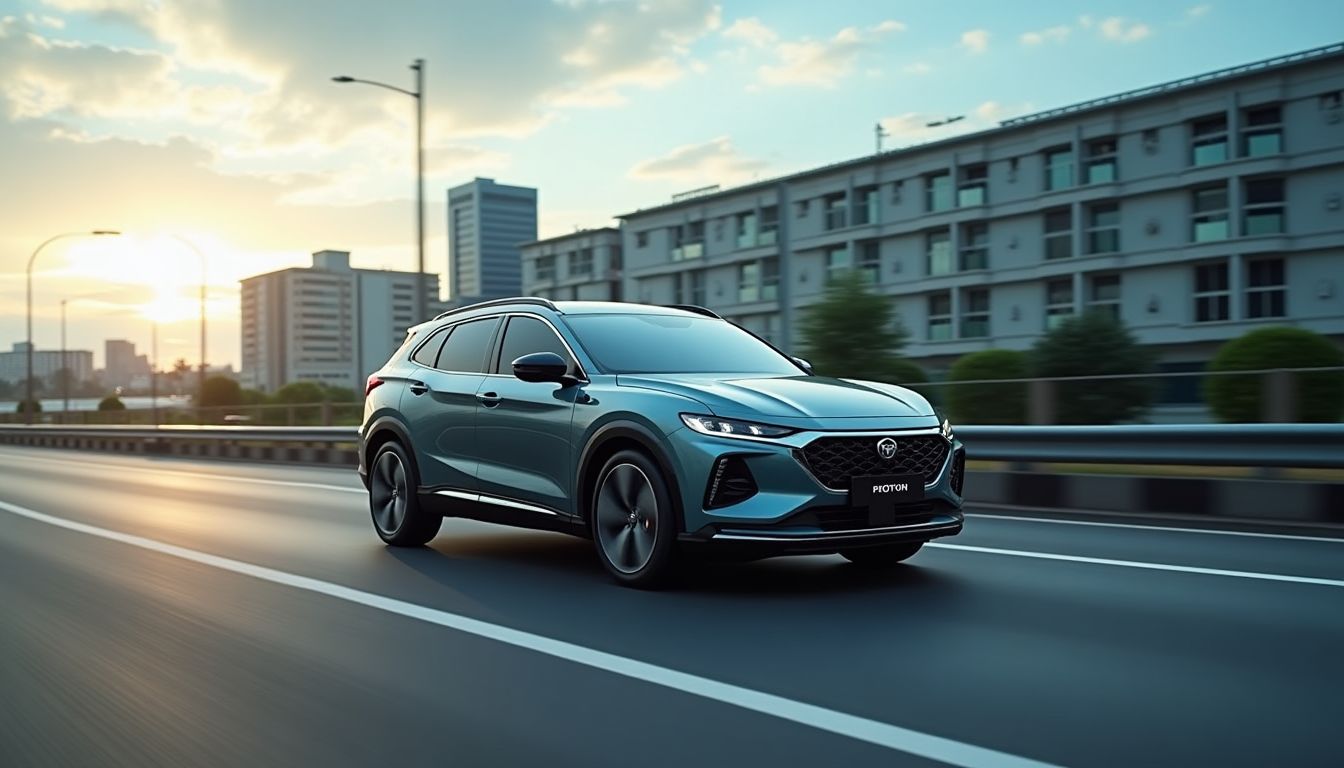
The partnership between Proton and Geely is now deep enough to evaluate with hard numbers rather than press releases. Since the Geely tie-up, Proton has launched 34 new models, expanded its dealership network by 146 new showrooms, and recorded what analysts are calling a 15-year sales high — a 144% climb from its 2018 all-time low.
The Proton Saga MC3 alone delivered 8,207 units in April 2026, a 50.9% month-on-month increase, with year-to-date deliveries now at 29,977 units, up 42.8% year-on-year. For a nameplate that has been in continuous production since 1985, those are not legacy numbers — those are competitive numbers.
More telling is the EV signal. The Proton e.MAS 5 has become the first electric vehicle to break into Malaysia's top five bestselling cars, capturing nearly 50% of the national EV market according to Pro-Net data cited by The Edge Malaysia. For a domestic brand that was considered structurally weakened as recently as 2018, this is a category-defining moment.
The product pipeline reinforces the trajectory. The AMA02 — a Saga Cross A-segment SUV positioned to rival the Perodua Ativa — is confirmed for production start in Q4 2026. Models AMA05 and AMA06 are planned, alongside a next-generation GMA electric vehicle, and mid-cycle updates for the S70 and X90. Paul Tan's Automotive News has documented this offensive in detail. Proton is no longer reacting to the market; it is attempting to set the cadence.
The caveat is real, however. Proton is currently in a legal dispute with a supplier over unpaid dues, as reported by The Edge Malaysia. Supply chain financial integrity — how manufacturers manage cash flow across their tier-one and tier-two supplier base — is a systemic risk that rapid model expansion amplifies, not reduces. The deputy minister's call for Malaysia's auto sector to move beyond assembly points precisely at this gap: assembly volumes look good; value chain depth does not yet match.
Perodua's EV Entry: The Battery-Lease Model Is the Real Story
Perodua's first electric vehicle is now confirmed for 2025–2026 launch, developed in collaboration with an international partner. The pricing is expected to hover around RM80,000 — but the structural innovation is not the price point. It is the battery leasing model.
Under this framework, the buyer purchases the vehicle body while leasing the battery pack separately. This directly addresses two of the most persistent barriers to EV adoption in Malaysia: residual value uncertainty and battery degradation risk. If you remove the battery from the asset valuation, the car's resale market becomes far more predictable. The customer stops worrying about a ten-year-old battery pack eroding their trade-in value.
The risk, documented by NST Online, is the enforcement mechanism: a Perodua EV can be remotely locked out for unpaid battery fees. This is not unprecedented globally — battery-as-a-service models in China have used similar controls — but it introduces a customer relationship dynamic that Malaysian consumers have not encountered before. How Perodua communicates and manages this contractual lever will determine whether the model scales or generates sustained backlash.
For brand managers and automotive marketers, this is an instructive case study in how product innovation creates communication obligations. The battery lease is a genuinely clever solution to an EV adoption barrier. But "clever" requires careful framing at point of sale. Brands navigating complex, multi-component product narratives — particularly in categories where trust is already fragile — increasingly rely on creator-led content to translate technical features into lived experience. Platforms like Creamatch, Malaysia's managed creator content platform, have become operationally relevant precisely here: matching brands with creators who can explain nuanced ownership models credibly and at scale.
Chinese Brands and the 7.6% Question
The market share trajectory for Chinese automotive brands in Malaysia — from 0.08% in 2022 to 7.6% today — demands structural explanation, not just acknowledgment. Three factors are compounding simultaneously.
First, the WASIC 2026 forum confirmed that China and Malaysia are actively exploring new automotive cooperation frameworks, according to The Star. This is not ambient diplomacy. It is a commercial alignment signal that affects import terms, joint venture structures, and technology transfer expectations.
Second, the semiconductor integration question is sharpening. A PwC analysis on the semiconductor-powered future of Malaysian automotive highlights the gap between vehicle assembly volume and chip-level integration capability. Chinese OEMs arrive with vertically integrated supply chains that already embed semiconductor design. Malaysian manufacturers, including Proton and Perodua, are building toward this — but the gap is a competitive variable, not a fixed disadvantage.
Third, pricing discipline. Chinese brands entering Malaysia have consistently landed below equivalent Japanese and Korean segments on spec-to-price ratio. Toyota Malaysia and Honda Malaysia retain strong brand equity and service network depth, but the value calculus is shifting for first-time buyers and younger purchasers, a demographic that Bernama has tracked as increasingly cost-sensitive in the post-pandemic ownership cycle.
For a detailed market sizing baseline, Focus2Move's Malaysian Vehicles Market data for 2026 provides the volume anchors against which these share shifts should be read.
What Marketers and Brand Managers Should Extract
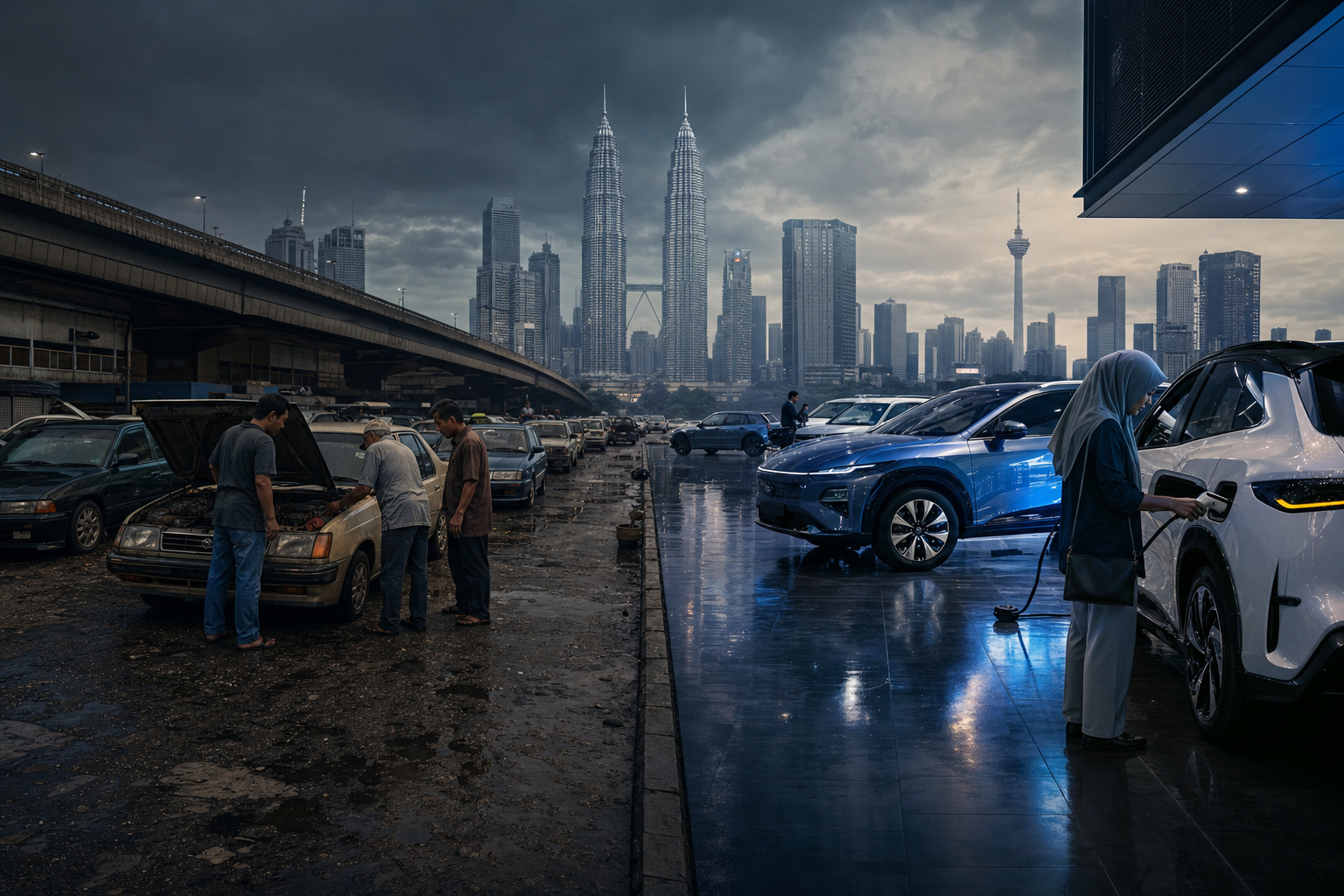
The Malaysian auto sector's current state is not a single story — it is four parallel disruptions running simultaneously: a domestic brand turnaround (Proton), a category debut (Perodua EV), a foreign brand category grab (Chinese OEMs), and a policy pressure to deepen the value chain rather than just grow assembly output.
For marketers operating in or adjacent to this sector, the actionable reads are specific:
- Proton's pipeline depth means media spend and content investment will intensify across at least six new nameplates over 18 months. Competitive brand positioning windows are compressing.
- Perodua's battery-lease model creates a consumer education gap that the brand cannot fill through conventional advertising alone. Trusted, long-form creator content is structurally better suited to explaining ownership models.
- Chinese brand growth is not a pricing story at this point — it is an awareness and trust-building story. Brands like Free Malaysia Today have noted that consumer familiarity with Chinese automotive brands has risen sharply, but purchase conversion still lags brand recognition. That gap is a content and community problem.
- Semiconductor and technology integration narratives are becoming brand equity variables, not just engineering footnotes. Manufacturers who communicate technical depth credibly will separate from those who communicate features alone.
The Verbrol Pulse feed on Malaysian automotive signals has tracked the Proton and Perodua volume consistently over the past quarter — the story the data keeps telling is structural acceleration, not cyclical bounce.
Malaysia's auto market in mid-2026 is not waiting for a catalyst. The rewrite is already in the numbers. The question for every brand, agency, and marketing team in this space is whether their strategy is calibrated to the market that exists now — or the one from three years ago.
Track Auto trends in real-time at verbrol.com
Read more on Verbrol Intelligence: