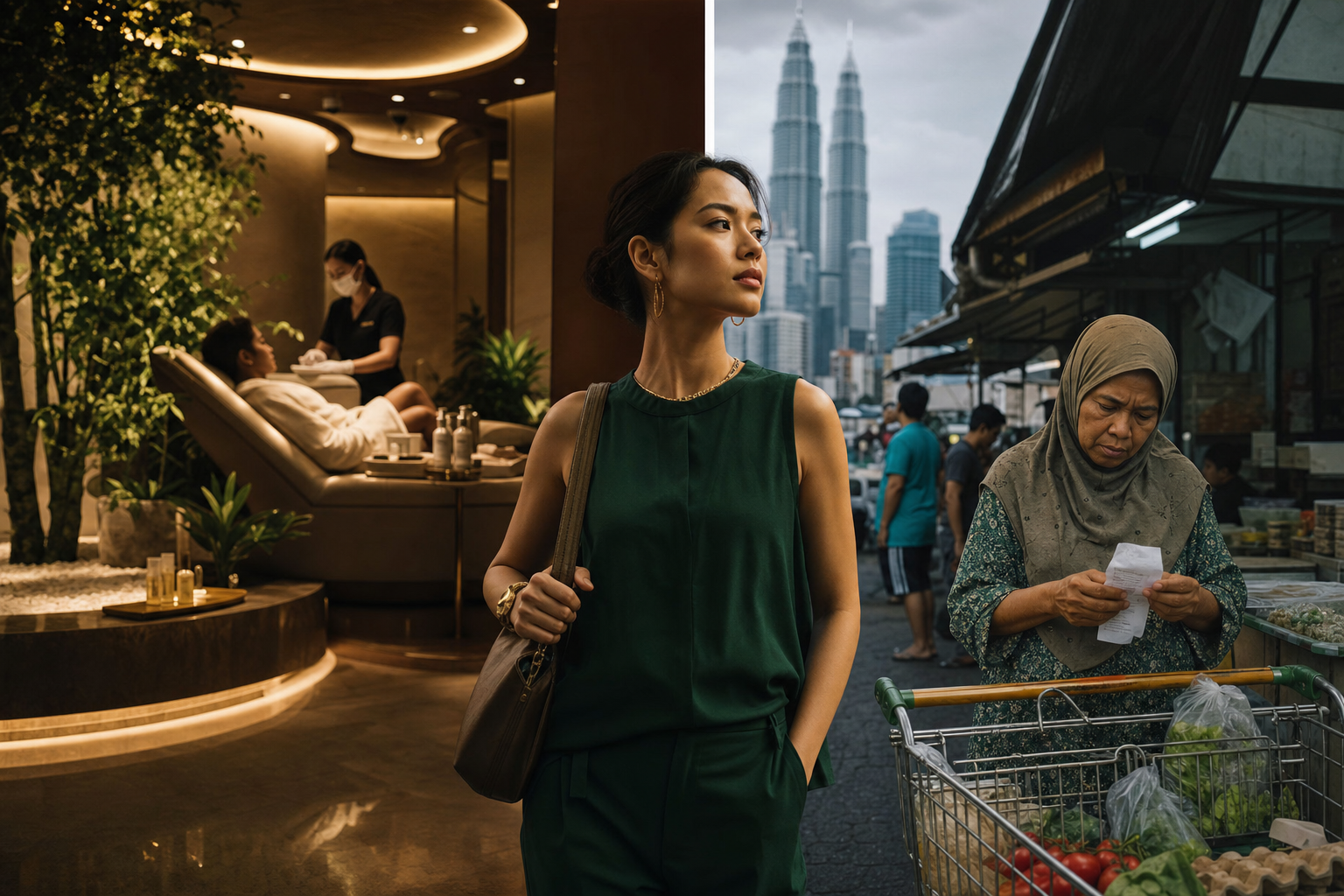
Malaysian consumers are simultaneously chasing longevity clinics and scrutinising every ringgit on their grocery receipts — and the lifestyle brands that try to straddle both worlds are quietly losing ground.
There are now Malaysians on waiting lists for full-body health scans they cannot yet afford, while others are disputing unauthorised charges on their shopping apps. Both stories are true at once — and together, they tell you almost everything about where Malaysia's lifestyle industry stands in mid-2026.
The Great Consumer Split
Something structural is happening to the Malaysian lifestyle market, and it is moving faster than most brand planners have accounted for. On one end, a health-conscious, aspiration-led segment is pulling hard toward premium wellness, cultural experiences, and what analysts are beginning to call 'affordable luxury' — a category that Swedish health startup Neko, with its 300,000-person global waitlist, has weaponised into a serious growth thesis. On the other end, a cost-pressured majority is tightening belts, questioning subscriptions, and, as a recent viral report in Malay-language media illustrated, actively flagging fraudulent charges from platforms they had trusted with their spending.
The Boston Consulting Group survey making waves across European fashion markets — where more than half of consumers now report worrying about daily finances — is not as geographically distant from Malaysia as it might seem. The psychological architecture is identical: inflation fatigue, eroded household confidence, and a recalibration of what feels worth spending on.
For Malaysian lifestyle brands, this is not an inconvenience. It is a fork in the road.
Wellness Is the New Aspirational Currency
Health advocates in Malaysia have been pushing this conversation for some time. A recent call reported by Free Malaysia Today urged policymakers to reward Malaysians who practise healthy lifestyles, signalling that the conversation around preventive wellness has moved well beyond gym memberships and green smoothies into genuine public policy territory. That shift matters enormously for lifestyle brands, because it means wellness aspiration now carries social legitimacy — it is no longer a luxury indulgence but a marker of responsibility.
This opens a genuine commercial lane for brands willing to position around longevity, prevention, and intentional living — not just aesthetics. Bonia, with its heritage positioning and loyalty among maturing Malaysian consumers, is sitting on an untapped alignment with this audience. The brand's equity in quality and longevity as values could translate directly into the language of considered consumption that wellness-oriented shoppers increasingly speak.
Meanwhile, IKEA Malaysia has quietly been executing this playbook for years — selling not furniture but the lifestyle of an ordered, sustainable home, with sustainability credentials and accessible price points that let it speak to both ends of the consumer spectrum simultaneously. That dual fluency is rare, and it is becoming more valuable.
Culture Is Doing Serious Commercial Work
It would be a mistake to read Malaysia's lifestyle moment purely through an economic lens. Culture is generating real commercial energy. Black Cat Dance Theatre's new work bridging Malaysia and Indonesia, reported by Bernama, represents exactly the kind of regional cultural confidence that feeds brand storytelling. The FIFA World Cup 2026 is another signal: a growing guide to where Malaysian football fans can watch the tournament is already circulating widely, confirming that communal, experience-based lifestyle moments — watching football together, attending live performances, gathering around shared meaning — are where discretionary spending feels justified even when household budgets are under pressure.
For brands, this is actionable. Cotton On Malaysia's community-facing campaigns and Padini's consistent anchoring of value fashion in everyday Malaysian life both point toward a truth the data keeps confirming: consumers are not withdrawing from lifestyle spending wholesale. They are withdrawing from lifestyle spending that feels hollow.
Creator-led content is amplifying this shift more than most brand managers are giving it credit for. When a Malaysian consumer sees a creator they trust reviewing a wellness product or styling an affordable outfit in a way that feels genuinely lived-in, it moves differently than a polished brand campaign. Platforms like Creamatch, which connects brands with managed creator content in Malaysia, are increasingly where the translation between brand intention and consumer trust actually happens.
There is also an intriguing migration story underneath all of this. Reporting from the South China Morning Post documents how China's 'involution'-weary professionals are looking at Malaysia as a destination — precisely because of its lifestyle offering, not despite its complexity. Quality of life, affordability relative to Singapore and Hong Kong, cultural plurality: these are lifestyle propositions. Brands paying attention to this inbound audience will find a consumer segment that skews toward quality, international frame of reference, and meaningful consumption.
What Brands Should Actually Do Differently
The strategic imperative in Malaysia's lifestyle sector right now is clarity. The consumer split is real, and the worst commercial response is a blurred middle — a brand that is too premium for value-seekers and too undifferentiated for aspiration-seekers.
Three moves matter most heading into the second half of 2026:
-
Commit to a lane, then over-deliver within it. Aeon and Mr DIY have both done this effectively — Aeon as the trusted family lifestyle anchor, Mr DIY as the champion of domestic self-improvement at accessible prices. Neither tries to be the other. That clarity is a competitive advantage, not a limitation.
-
Build wellness into the brand narrative, not just the product line. Malaysian consumers are increasingly evaluating lifestyle brands on what values they embody, not just what they sell. This is where Uniqlo Malaysia's 'LifeWear' framing continues to earn it permission to operate across price points — the philosophy does the positioning work.
-
Use creator content as a trust bridge, not just a reach mechanism. The engagement gap between polished brand content and authentic creator storytelling is widening. Managed platforms like Creamatch exist specifically to help brands navigate this without losing quality control — a balance that matters more as consumer scepticism grows.
The lifestyle sector in Malaysia is not in decline. It is in the middle of a painful, necessary clarification — one that will leave sharper, more honest brands standing and blur the ones that tried to be everything to everyone.
That is, ultimately, a story worth paying attention to. According to The Star, Malaysian consumer sentiment and spending patterns are already shifting in ways that will define retail and lifestyle brand fortunes well into the decade. The question is not whether your brand will be affected. It is whether you will read the signal before or after your competitors do.
Monitor the signals that matter, analyse them with context, and make the move before the market forces your hand. Verbrol Pulse tracks these consumer and brand shifts across Southeast Asia in real time — because in a market moving this fast, timing is strategy.
Track Lifestyle trends in real-time at verbrol.com
Read more on Verbrol Intelligence: