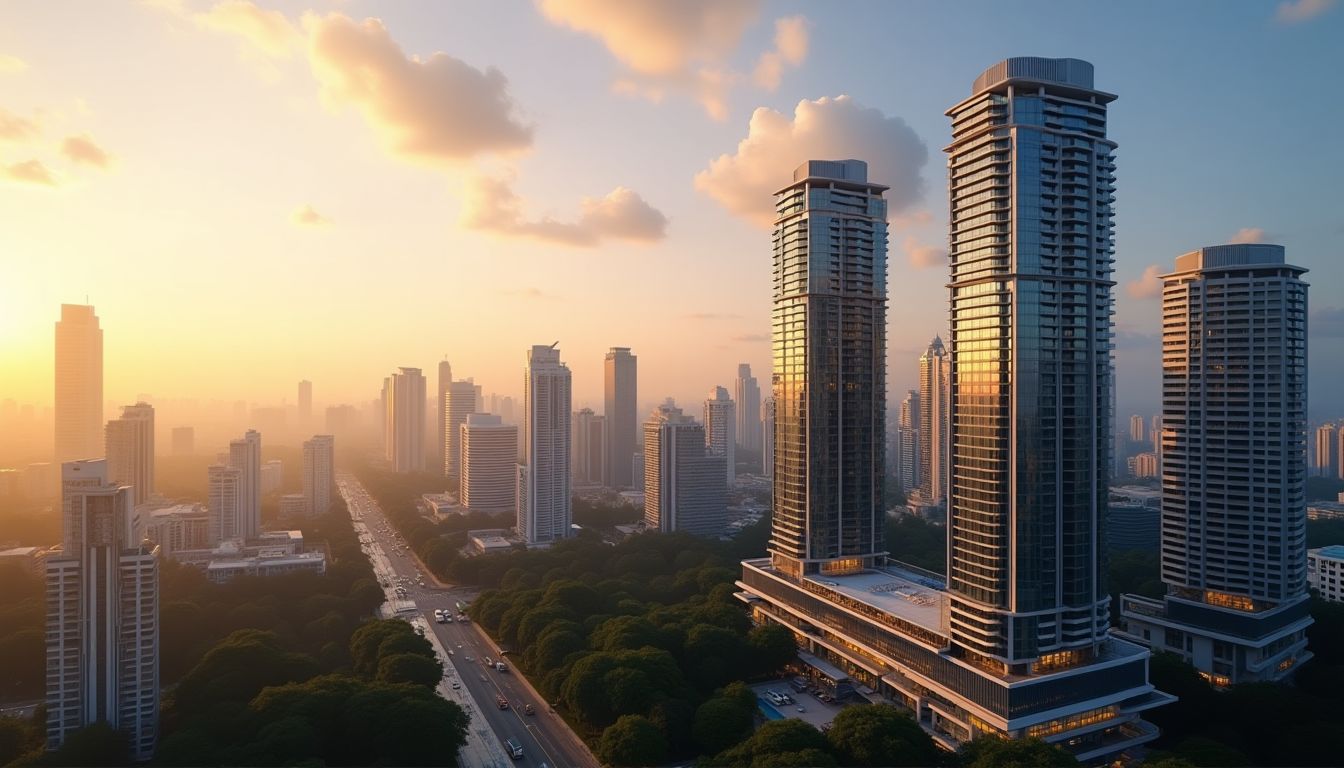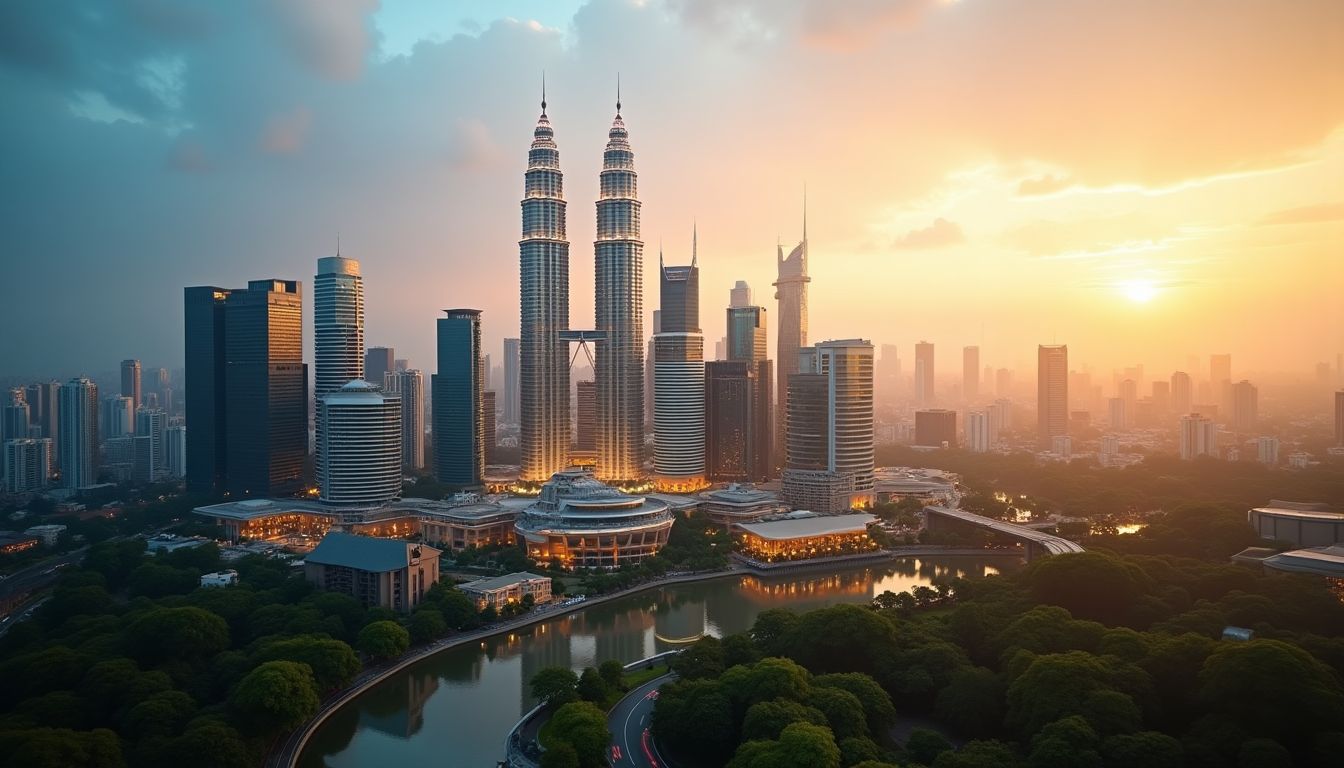
Big capital is aligning behind transit, technology, and brand — and Malaysia's property developers are finally building in the same direction as the infrastructure.
Stand at the entrance of Cochrane MRT station on a weekday morning and you get a precise read on where Malaysian real estate is heading. Commuters stream through. The air smells of construction dust from an adjacent hoarding. A render on that hoarding shows towers, a retail podium, greenery — all branded The Linque. It is not aspirational wallpaper. It is a RM600 million signal.
MRT Corp and IJM Land's The Linque transit-oriented development at Cochrane tells you something structural about the current cycle: the developers who are winning are the ones building into infrastructure, not around it. That thesis is now playing out across multiple fronts simultaneously — transit integration, smart technology, branded luxury, and industrial land repositioning. Each is a distinct segment. Together, they constitute a coherent directional bet on where Malaysian property value will accrete over the next decade.
Transit-Oriented Development Is No Longer a Concept — It's a Capital Decision
The Linque is not the only evidence. At the macro level, Genting Property's announcement of an RM80 billion Johor Tech Smart City in Kulai represents the sharpest articulation yet of infrastructure-as-thesis. The project is not simply residential acreage with a tech narrative grafted on. It is positioned as an integrated ecosystem anchored by connectivity — road, digital, and eventually rail — in a corridor that the Johor-Singapore Special Economic Zone is already making strategically legible to foreign capital.
The logic is compounding. When MRT ridership data validates walkable catchment zones, residential absorption rates within 500 metres of stations outperform the broader market. When cross-border economic activity intensifies the Johor corridor, industrial and commercial land near logistics nodes re-prices faster than anyone's DCF model anticipated. Developers like IJM and Gamuda have been running this infrastructure-proximity playbook long enough to have institutional confidence in it. The new entrants — including Genting Property's pivot into smart city territory — suggest the playbook is now consensus.
For investors tracking fundamentals, NAPIC's transaction volume data remains the cleanest lens on where actual absorption is happening versus where press releases are pointing. The gap between those two is where informed capital finds its edge.
Smart Home Technology Is Shifting From Feature to Filter
Parallel to the infrastructure story, smart home adoption is materially changing buyer qualification criteria in Malaysia's real estate market in 2026. This is no longer about smart locks and app-controlled air conditioning as selling features in a brochure. Among the RM700,000-and-above segment — the band where discretionary upgrade decisions are most actively made — buyers are filtering listings on connectivity infrastructure, home automation readiness, and developer after-sales support for integrated systems.
Developers who recognised this early have restructured their value proposition accordingly. Mah Sing, operating in the affordable-to-mid-market band, has layered digital readiness into its product spec as a retention tool as much as an acquisition one. EcoWorld's township model has similarly embedded smart infrastructure at the estate level, not just the unit level — a distinction that becomes commercially significant when you consider that resale premiums are increasingly driven by estate-wide digital amenity, not individual unit fit-out.
For brand managers and marketing teams working with developers, the implication is precise: content that demonstrates actual smart home functionality — not renders, not lifestyle vignettes — is outperforming aspirational imagery in conversion metrics. Platforms like iProperty are already seeing longer session durations on listings with embedded walkthrough content. Developers who partner with creator platforms such as Creamatch to produce authentic, technically credible home walkthroughs are reaching the exact buyer cohort — urban professionals, dual-income households — who have the purchasing power and the technology literacy to act on what they see.
Branded Residences Are Redrawing the Luxury Ceiling
At the premium end of the market, the signal is equally unambiguous. The rise of branded living is adding a structurally new value layer to Malaysia's luxury property landscape. Branded residences — developments co-branded with international hospitality groups or lifestyle labels — command price premiums of 20–35% over comparable non-branded luxury stock in the same submarket. That gap has widened as foreign buyer interest in Kuala Lumpur and Johor has intensified post-2024.
SP Setia and IOI Properties have both manoeuvred into premium positioning with international brand anchors. The mechanism is not mystical: a recognised brand reduces perceived risk for foreign buyers who cannot physically inspect the asset, provides a credible management covenant, and signals a maintenance standard that protects long-term capital values. In a market where legal structuring around residential-retail mixed agreements is becoming more complex, brand equity also functions as a legal due-diligence shortcut for buyers who want certainty without navigating Malaysian property law from scratch.
Industrial Repositioning: The Quiet Re-Rating
Beyond the residential narrative, the transaction that deserves closer attention is Mycron's RM30 million acquisition of a Shah Alam property from Melewar. Industrial and logistics-adjacent land in the Klang Valley is being quietly re-rated. The driver is straightforward: the same infrastructure investment that is compressing commute times for residential buyers is simultaneously compressing last-mile delivery distances for logistics operators. Land that was peripheral five years ago is now proximate.
Sunway, with its diversified portfolio spanning industrial, commercial, and residential in the Klang Valley, has the asset mix best positioned to capture cross-segment appreciation as this re-rating plays out. The relevant metric to watch — available through NAPIC's industrial transaction series — is price-per-square-foot movement in the Shah Alam–Subang corridor over the next two quarters.
Actionable Takeaways for Developers, Investors, and Brand Teams
- Underwrite proximity, not just price. TOD premiums are not a marketing claim; they are a transaction-verified reality. Any residential project within a credible MRT or BRT catchment zone should be modelled with a connectivity premium baked into the base case, not the upside scenario.
- Treat smart home capability as spec, not feature. The buyer cohort with purchasing power in the RM700k–RM1.5 million range is filtering on digital infrastructure. Developers who treat this as optional are ceding competitive position to those who do not.
- Branded residences require authentic content pipelines. Premium positioning is undermined by generic marketing. Engage technically credible content creators — through platforms like Creamatch — to build the evidentiary case for quality that branded buyers require before committing.
- Watch industrial land in the Klang Valley. The Mycron-Melewar transaction is a data point in a larger pattern. Industrial re-rating in infrastructure-adjacent corridors is underpriced relative to the residential story attracting most attention.
Malaysia's property market in mid-2026 is not in a speculative upswing. It is in a structural consolidation around infrastructure-linked value. The developers, investors, and brand teams who understand that distinction — and act on it with precision — will outperform those chasing cyclical momentum. The Verbrol Pulse is tracking the transaction and sentiment signals across all segments in real time. The direction is clear. The question is execution speed.
Track Property trends in real-time at verbrol.com
Read more on Verbrol Intelligence: