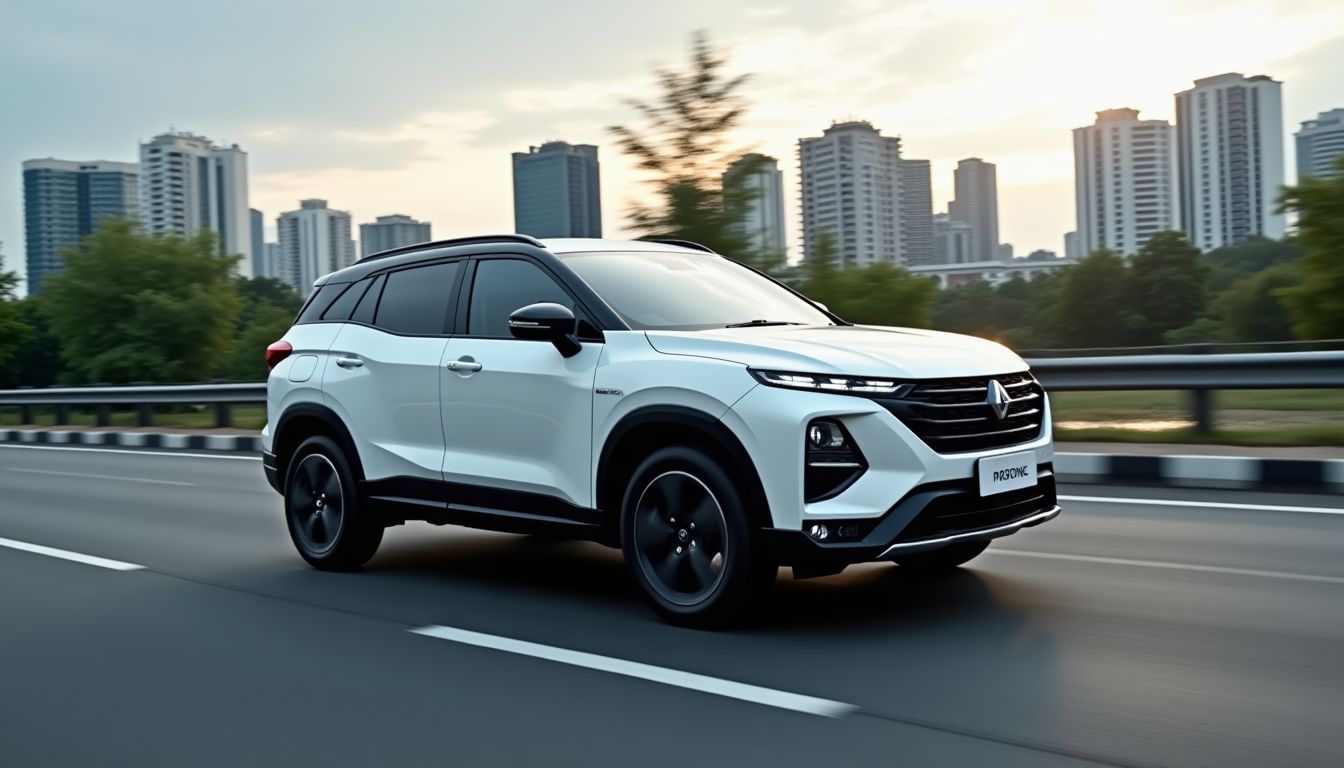
Proton just posted a 40.9% sales surge and shipped its facelifted X50 to Brunei as its first export market — but the more consequential move is the dedicated export company sitting quietly behind both headlines.
Is Proton finally becoming a regional brand, or is this the same expansion narrative Malaysia has heard before?
That question is worth sitting with seriously this week, because the signals coming out of the Malaysian automotive sector over the past 48 hours are not routine product announcements. They form a coherent operational pattern — one that supply chain professionals should read carefully before it becomes consensus knowledge.
The Numbers Beneath the Headline
By now most people in the industry have seen the headline: Proton sales surged 40.9% in 2026, capturing 26.4% market share in Malaysia. That is not a rounding error. That is a structural re-ranking of the domestic market. For context, Perodua has historically anchored above 38% market share, making any challenger crossing the mid-20s a meaningful competitive event.
But raw volume is only one layer. The more operationally significant data point is the year-to-date trajectory: Proton moved 143,000 units through November of the prior cycle and is tracking 38% growth through the first five months of 2026 according to reporting in The Star. When growth rates hold across consecutive measurement windows, they stop being momentum and start being capacity stress — on suppliers, logistics networks, and after-sales infrastructure alike.
The 2026 Proton Saga MC3 alone has exceeded 70,000 bookings, which is an extraordinary pre-delivery commitment for a model in the entry segment. That booking volume tells you something specific about working capital requirements and component lead times that a simple sales figure does not.
A Dedicated Export Entity Is Not a Marketing Move
Here is where the analysis gets more interesting. Proton has formally established a dedicated export company to manage its overseas expansion. This is not a distribution agreement. It is not a regional dealership arrangement. A standalone export entity implies a separate profit-and-loss structure, dedicated headcount, customs and trade compliance functions, and the internal accounting separation necessary to price competitively in foreign markets without cross-subsidising from domestic margins.
The operational proof of concept arrived simultaneously: the Proton X50 facelift has launched in Brunei as the brand's first confirmed export market for the updated model, priced between RM87,000 and RM109,000. The powertrain specification — a 1.5T i-GT four-cylinder paired with a 7-speed dual-clutch transmission — is the same unit that anchors Proton's domestic positioning. Keeping powertrain parity across markets simplifies the parts supply chain considerably and reduces the SKU complexity that has historically inflated costs for Malaysian brands attempting to regionalise.
Brunei is a small market by volume. But it is a deliberate first market: high average transaction prices, a customer base already familiar with right-hand-drive vehicles, and a regulatory environment that does not require extensive re-homologation. From a supply chain sequencing perspective, it is the correct place to stress-test export logistics before targeting larger ASEAN destinations.
As The Edge Malaysia's automotive sector analysis has noted, the shifting tone in the automotive sector requires a delicate balance — between domestic volume and export ambition, between combustion and electrification, between national champion status and commercial viability abroad.
Electrification Is Compressing the Timeline
The Proton e.MAS 7 PHEV is not a concept. It has accumulated 6,500 bookings within two months of availability, which Zigwheels has described as reflecting genuinely changing buyer preferences rather than early-adopter noise. At that booking velocity, the e.MAS 7 PHEV is already validating the plug-in hybrid segment in a market where total EV and PHEV penetration has remained structurally low.
This matters for the export story in a specific way. PHEV capability is increasingly a market-entry requirement in Southeast Asian markets where full EV infrastructure is not yet reliable. A PHEV-capable platform travels more easily across ASEAN borders than a pure battery-electric model. Proton's simultaneous push on combustion export (X50 facelift to Brunei) and PHEV domestic volume (e.MAS 7) is not an inconsistency — it is a two-track platform strategy that hedges regulatory risk across different national timelines.
Malaysia's auto industry must move up the value chain to ensure growth in an evolving mobility landscape — that framing from the Malaysian Automotive Institute points directly at the same structural challenge. Volume growth at Proton is necessary but not sufficient. The value-add per vehicle, and the proportion of locally manufactured components in export models, will determine whether this expansion cycle generates durable margin or simply moves units.
The government's own signalling reinforces the urgency. Malaysia's Deputy MITI Minister has publicly stated a target of Level 3 autonomous driving capability by 2030, directing the industry to prepare. Level 3 autonomy requires domain controllers, sensor fusion stacks, and over-the-air update infrastructure — none of which Proton currently manufactures domestically. As PwC's analysis of semiconductor integration in Malaysian automotive outlines, the gap between current domestic semiconductor capability and autonomous driving requirements is significant and closing it will require deliberate policy coordination — not just OEM ambition.
Brands like Toyota Malaysia and Honda Malaysia, operating here as subsidiaries of global OEMs, already have access to parent-company autonomous and electrification platforms. That is a structural advantage Proton must partially offset through its Geely partnership — and the degree to which localisation targets are met within those co-developed platforms will directly affect export cost competitiveness.
What Marketers and Brand Managers Should Actually Do With This
If you are managing a brand in the automotive ecosystem — whether a Tier 1 supplier, a financial services provider, an insurance group, or an aftermarket business — the directional read from this week's data is clear:
-
Volume concentration risk is rising. Proton at 26.4% market share and climbing means category spending, media inventory, and consumer attention are concentrating faster than most annual plans have modelled. Re-examine your channel mix assumptions for H2 2026.
-
The PHEV segment needs dedicated creative treatment. The e.MAS 7 PHEV buyer is not the same person who bought the Proton X70 three years ago. The 6,500-booking signal in two months is a segmentation event. If your brand has relevance in the PHEV transaction journey — financing, insurance, accessories, charging infrastructure — now is the time to build category presence before it consolidates around a few dominant voices. Platforms like Creamatch, which connects brands with managed creator content in Malaysia, are particularly well-positioned to help brands reach early EV and PHEV adopters through credible automotive voices.
-
Export market activation is a B2B story before it is a B2C one. Proton's Brunei entry creates downstream opportunity for Malaysian logistics, compliance, and financial services providers. The export entity structure means vendor relationships will be negotiated separately from domestic operations.
-
Track the autonomous driving policy timeline closely. The 2030 Level 3 target will generate procurement cycles — for simulation software, sensor components, and testing services — that are visible 24 to 36 months before they appear in public tender announcements. According to Bernama, government-linked technology procurement in the automotive space is already under review in line with the National Automotive Policy revision cycle.
The Malaysian Vehicles Market data for 2026 confirms the overall market is expanding, not just redistributing. That matters because it means Proton's share gain is not purely coming at the expense of Perodua or the non-national brands — there is genuine new demand entering the market, likely driven by income recovery, hire-purchase rate stabilisation, and deferred purchase decisions converting.
The Malaysian auto market in mid-2026 is not a single story. It is several structural shifts occurring in the same window: a national brand internationalising, a powertrain transition accelerating, an autonomy policy deadline approaching, and a supply chain that must scale all three simultaneously. The brands that read that complexity accurately — and position early — will not be scrambling to catch up in 2027.
Track Auto trends in real-time at verbrol.com
Read more on Verbrol Intelligence: