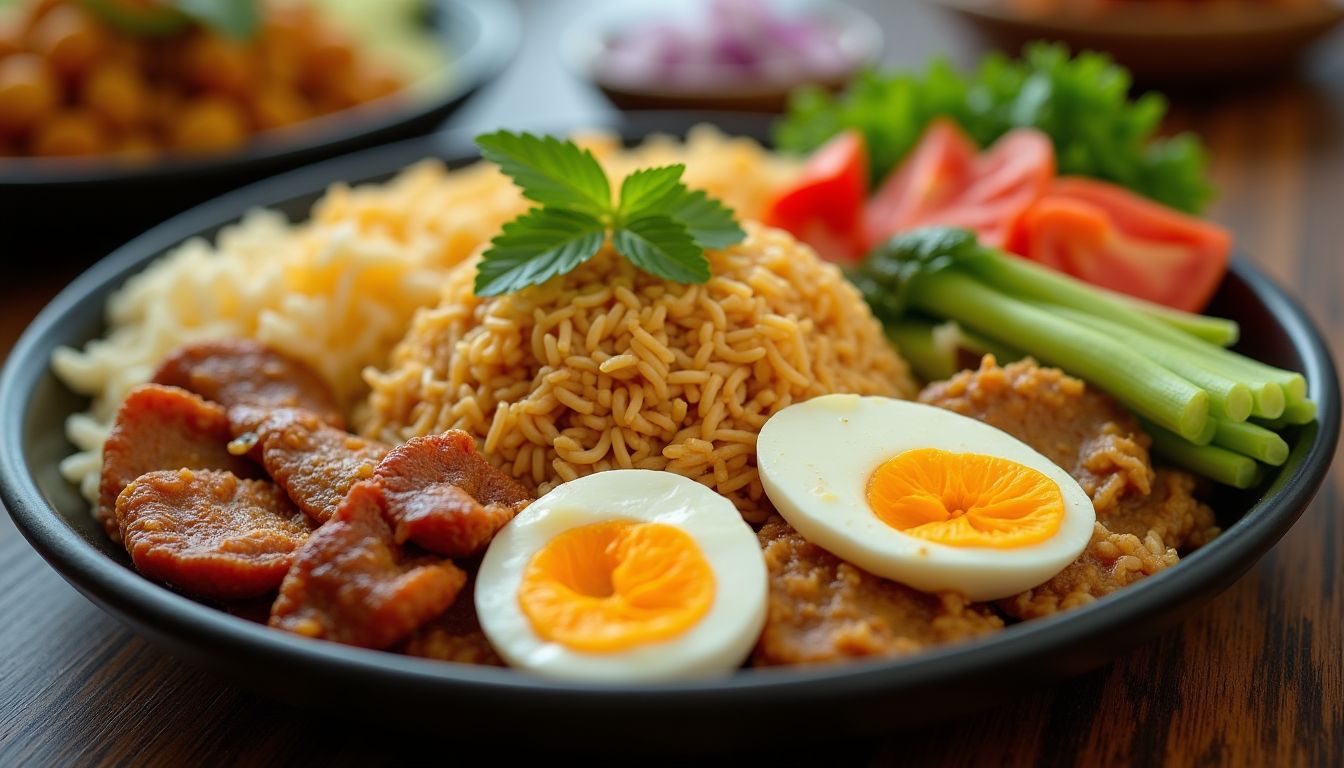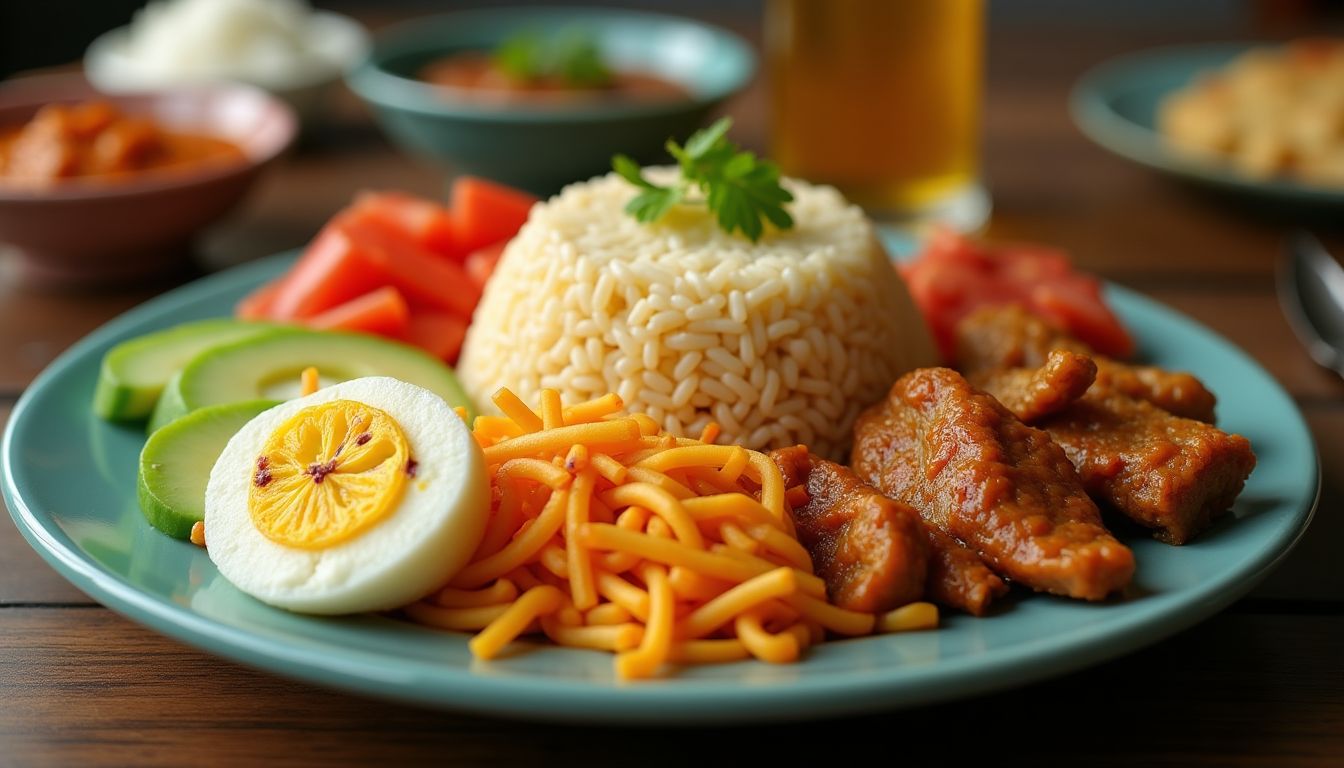
Expansion capital is flooding into Malaysian food and beverage — but the operators winning customer loyalty are those who understand that trust, not just taste, is the real competitive moat.
Malaysians do not simply eat. They negotiate identity at the table. A bowl of tom yam is never just dinner — it is a declaration of heritage, a test of authenticity, and increasingly, a political statement about what belongs to whom and who can be trusted to serve it. That cultural weight makes Malaysia one of Southeast Asia's most dynamic — and most demanding — food markets. And in mid-2026, the signals running through it are pointing in several directions at once.
For brand managers and marketing strategists watching this space, the challenge is not a shortage of opportunity. It is the discipline to read which forces are structural and which are merely loud.
The Expansion Wave Is Real — and It Is Accelerating
The scale of capital moving into Malaysian F&B right now is not incidental. McDonald's Malaysia has announced plans to add 100 new outlets to its national footprint, a commitment that signals confidence in middle-income consumer spending despite broader cost-of-living pressures. Domestically, HWC Coffee is moving to open 85 new locations — a number that, when placed alongside the aggressive growth already logged by ZUS Coffee and Tealive, confirms that the café segment has entered a phase of structural, not cyclical, expansion.
The special report on the F&B battle for Malaysian taste buds published by The Edge Malaysia captures this competitive intensity clearly: local chains and international brands are competing not just for floor space, but for the loyalty of a consumer who is better informed, more values-driven, and considerably less forgiving than a decade ago.
This trajectory is borne out in the numbers. According to Statista's tracking of Malaysia's food and beverage services industry revenue from 2014 to 2023, the sector has demonstrated consistent growth even through disruption years — a baseline that underpins the current expansion confidence. The upcoming Malaysian International Food and Beverage Trade Fair, positioned by organisers as a platform to power long-term growth for local brands, reflects institutional alignment with this momentum.
For brand managers, the actionable read here is straightforward: the infrastructure race is underway, and late movers in site acquisition and franchise development will pay a premium within 18 months.
Halal Integrity Is Not a Checkbox — It Is an Existential Requirement
If expansion is the opportunity signal, halal integrity failures are the risk signal — and right now, that risk signal is flashing with unusual frequency.
Within the same 48-hour window, two distinct violations entered the public record. A directive was issued for coffee and biscuit products to be withdrawn from shelves after pig bristle brushes were found to have been used in their production — a violation that strikes at the heart of Muslim consumer trust and carries immediate reputational consequences far beyond the brands directly implicated. Separately, a food animal feed factory in Baling was raided by the Ministry of Domestic Trade and Cost of Living, with 53 tonnes of unpermitted wheat flour seized — a supply chain integrity failure that, while one step removed from the consumer, illustrates how deeply compliance failures can run.
These incidents do not exist in isolation. They sit alongside a procurement scandal in which six companies were charged in connection with a cartel scheme manipulating food supply tenders for the National Anti-Drug Agency — a case that exposes how procurement fraud corrupts not just pricing, but the entire value chain from supplier to institution.
For brands operating in the halal economy, the lesson is not merely procedural. Halal compliance has moved from a regulatory obligation to a brand equity variable. Consumers who feel deceived — whether by a mislabelled ingredient or a compromised supply chain — do not simply switch brands. They publicise the breach. The viral spread of a maggot discovery in fried chicken at a Malaysian restaurant, reported internationally by NDTV and amplified across Malaysian social media, demonstrates how rapidly a single hygiene or integrity failure escapes local containment.
Brand managers should conduct supply chain audits with the same rigour applied to consumer-facing marketing. The kitchen is now a public-facing space.
The Experience Economy Has a Malaysian Flavour
Khairul Aming's restaurant Rembayung sold out in record time on opening. Malaysian diners queued, shared, and celebrated it — not merely because the food was good, but because it represented something: a creator-turned-restaurateur who had built genuine trust before ever plating a dish. The Michelin Guide Kuala Lumpur & Penang 2026 meanwhile added institutional validation to what Time Out KL has been documenting in real time: Kuala Lumpur and Penang are genuine fine-dining destinations, not aspirational ones.
At the same time, kopitiam nostalgia is having a mainstream moment. Nescafé's new packaging and flavours are explicitly designed to evoke kopitiam memory — a calculated move by a global brand to localise through cultural resonance rather than novelty. Old Town White Coffee built an entire empire on this instinct. The current wave confirms the insight is durable.
A social media observation circulating on Threads framed it cleanly: businesses selling experience are winning; businesses selling content are losing. That framing maps onto the F&B landscape with uncomfortable precision. A new viral Chinese restaurant in Malaysia draws YouTube audiences not because it runs advertisements, but because the experience itself is worth documenting. A reinvented fries café generates organic video content because the product is genuinely surprising. The content is the consequence of the experience, not the strategy itself.
For marketing teams, this reorients budget logic. Investment in the physical and sensory experience — hospitality, ambience, ingredient quality, staff knowledge — generates organic reach that paid content cannot replicate at equivalent cost. Brands like myBurgerLab and Marrybrown, which have maintained distinctive brand personalities built on genuine product identity, demonstrate the long-term equity value of this approach.
When brands do choose to work with creators, the discipline lies in selecting those with authentic category authority rather than raw follower counts. Platforms like Creamatch, Malaysia's managed creator content platform, exist precisely to facilitate that alignment — matching F&B brands with creators whose audiences reflect genuine purchase intent rather than passive reach.
A Field Guide: Four Principles for Malaysian F&B Brand Managers in 2026
-
Audit before you expand. New outlets and new SKUs amplify existing operational standards — good or bad. Integrity failures at scale are significantly harder to contain than integrity failures at unit level.
-
Position halal compliance as a brand story, not a legal footnote. The brands that will command premium loyalty in the Muslim consumer segment are those that narrate their supply chain with transparency. Tourism Malaysia's ongoing push to position the country as a global halal food destination creates an external tailwind for brands willing to lead this narrative domestically.
-
Invest in the experience layer before the content layer. Rembayung did not go viral because of a content strategy. It went viral because the experience justified documentation. Build the thing worth filming before you brief the creator.
-
Watch the procurement layer. The AADK tender cartel case is a reminder that competitive advantage gained through supply chain manipulation is both illegal and fragile. Brands with clean, auditable procurement are accumulating a structural moat as enforcement tightens.
The MIFB trade fair in the months ahead will be a useful barometer for where institutional and investment confidence is concentrating. Brand managers should attend not as exhibitors seeking leads, but as intelligence gatherers mapping the competitive field.
Malaysia's food market in 2026 is expanding rapidly, scrutinised intensely, and rewarding the operators who understand that the consumer's most fundamental question — can I trust this? — is being asked before the first bite is ever taken. The brands that answer it convincingly, across every layer from supply chain to service, are the ones building durable equity in one of Southeast Asia's most discerning markets.
Track F&B trends in real-time at verbrol.com
Read more on Verbrol Intelligence: