Big investment is landing on the factory floor — but the real test is whether Malaysia's auto industry can manufacture the next chapter, not just assemble it.
The Question the Industry Is Finally Answering
Can Malaysia build cars — or does it only put them together?
That distinction, uncomfortable as it is, sits at the centre of every major announcement reshaping the country's automotive sector this month. The signals are arriving in quick succession: a national carmaker claiming nearly half of Malaysia's electric vehicle market, a parts manufacturer breaking ground on a nine-figure production facility, and a government that is, with increasing directness, telling the industry it must stop coasting on assembly economics.
For brand managers, procurement leads, and market analysts tracking this space, the picture emerging in June 2026 is not one of crisis — it is one of structured, sometimes painful, industrial reinvention.
Proton and Perodua Are Running Separate but Parallel Races
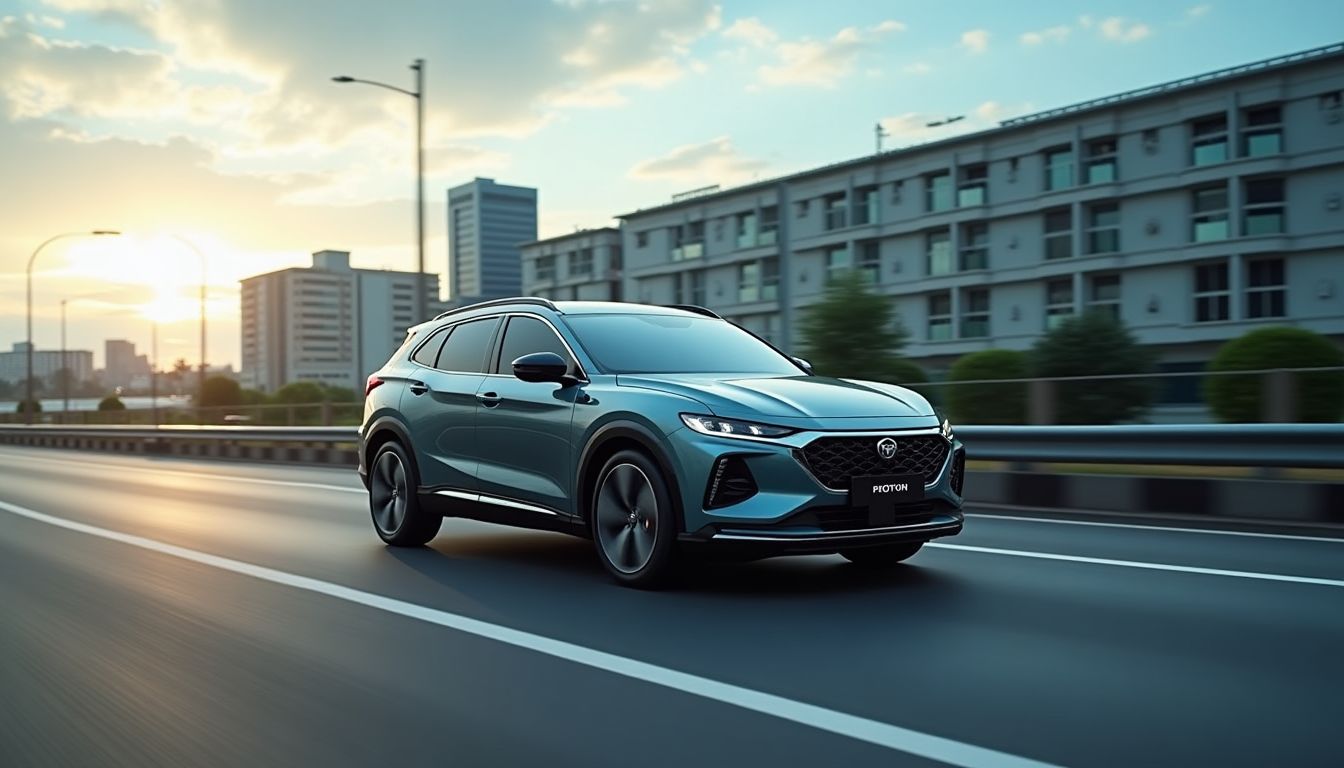
The headline number belongs to Proton. The eMas range now commands 46% of Malaysia's EV market in 2026, a market-share figure that would have been implausible two years ago for a brand still working through its Geely partnership architecture. That Proton has reached this position through the eMas platform — purpose-built for electric, not retrofitted from combustion — matters structurally. It means the localisation investment is going into the right product generation.
Perodua is running a quieter but equally consequential play. The QV-E, its first electric vehicle, has just been repriced: RM63,499 with BaaS battery leasing, or RM87,499 for outright purchase. The company credited a "major localisation shift" for enabling the reduction. That is not marketing language — it is a supply chain statement. When a manufacturer can lower the price of an EV by deepening local content, it means the industrial ecosystem around that product is maturing. Local tooling, local sourcing, local assembly stages. The cost curve bends.
For context on where the competitive ceiling sits: BYD has sold more than 20,000 units in Malaysia and holds the title of top EV brand for three consecutive years. The 2026 BYD Atto 3 facelift pulled 1,000 bookings within ten days of launch, with the 510 km Premium RWD variant outperforming the standard configuration in demand. BYD's benchmark is real and it is setting the pace. What Proton and Perodua are now doing is building the industrial capacity to compete with it — not just on specification sheets, but on the factory economics that determine whether competitive pricing is sustainable.
The Manufacturing Layer Is Getting a Serious Upgrade
Behind the vehicle launches, the industrial infrastructure story is arguably more significant for long-term sector health.
EP Manufacturing Berhad (EPMB) has broken ground on a new vehicle painting facility at its Melaka CKD hub, with a projected capacity of 30,000 units annually and an operational target of June 30, 2027. Total investment in the facility reaches RM200 million. This is not incremental capacity — it is a new production process node entering the Malaysian supply chain. Vehicle painting at this scale, built domestically, reduces dependence on imported finishing services and positions Malaysia's CKD (completely knocked down) ecosystem to handle higher-value assembly stages.
Also noteworthy: Aapico, Thailand's largest auto parts manufacturer, is partnering with Proton to invest RM140 million in Avee Global (Miyazu). The involvement of a regional Tier-1 supplier at this investment level signals that Malaysia's parts manufacturing base is attracting serious cross-border capital — not charity investment, but strategic positioning by a supplier that sees long-term order volume. According to Bernama, such partnerships represent exactly the kind of upstream industrial deepening the sector needs.
Separately, the Proton Saga MC3 has just launched in three variants — Standard at RM38,000, Executive at RM44,000, Premium at RM49,000 — powered by an updated 120 PS 1.5-litre four-cylinder. The Saga remains Proton's volume anchor in the combustion segment. Its continued investment in mid-cycle improvements while simultaneously scaling the eMas EV platform is a dual-track strategy: defend the existing revenue base while building the next one.
The Value Chain Mandate Is Now Policy, Not Aspiration
Malaysia's Deputy Minister of Investment, Trade and Industry has made it explicit: the auto sector must shift gears beyond assembly. The framing is consistent with what industry observers have been flagging for several quarters: Malaysia has the assembly infrastructure; what it has historically lacked is deep manufacturing of the components, software, and systems that determine margin and resilience. A CKD operation that cannot indigenise key value steps is permanently exposed to exchange rate movements, supply disruptions, and the pricing decisions of foreign principals.
The current cluster of activity — Perodua's localisation-driven repricing, EPMB's new paint facility, Aapico's Proton partnership — suggests the industry is responding to this mandate with capital, not just statements. The question is velocity. EV platform generations cycle in three to four years. The window for Malaysia to embed itself in the regional EV supply chain as a manufacturing node — rather than just a sales market — is not indefinite.
For those tracking competitive dynamics across ASEAN, The Star has noted that Thailand and Indonesia are both aggressively courting EV component manufacturers with incentive packages. Malaysia's advantage is its existing Tier-1 supplier base and its national carmaker infrastructure. Losing that window would not be catastrophic in the short term; over a decade, it would be defining.
What Marketers and Brand Managers Should Track Now
For those whose work touches this sector — whether in automotive retail, B2B supply chain, or industrial brand communications — the actionable reads from June 2026 are specific:
- Localisation is now a pricing lever, not just a nationalist talking point. Perodua's QV-E repricing is a proof of concept. Brands and suppliers who can demonstrate local content depth will have genuine cost advantages to market.
- The EV segment is bifurcating on range and use case. The BYD Atto 3 Premium RWD (510 km range) outselling the standard variant is a consumer signal: buyers who commit to EV want real-world range confidence, not entry-level specifications.
- Tier-1 supplier investment is accelerating. The Aapico-Proton-Avee Global deal is the kind of anchor investment that brings secondary suppliers. Companies positioned in the automotive supply chain should be monitoring which component categories are still import-dependent.
- Industrial infrastructure projects have long media tails. EPMB's facility won't be operational until mid-2027, but the communications, procurement, and workforce hiring cycles begin now. Verbrol Pulse tracks these industrial signals as they move through supply chain and trade media — useful for B2B brands timing market entry or partnership outreach.
For automotive brands running content and creator campaigns alongside these product launches, the localisation narrative is genuinely compelling storytelling material. Platforms like Creamatch, Malaysia's managed creator content platform, are well-positioned to translate technical manufacturing milestones — price reductions, new facilities, supply chain partnerships — into audience-relevant content that moves beyond specification comparisons.
The Industry Is Building, Not Just Launching
Malaysia's automotive sector in mid-2026 is not short of activity. What distinguishes this moment from previous cycles is that the activity has structural depth: price reductions backed by real localisation, manufacturing investment tied to specific capacity targets, and cross-border supplier partnerships that reflect genuine commercial logic.
The assembly-to-manufacturing transition that policymakers and Free Malaysia Today industry reporters have long called for is happening — incrementally, unevenly, but with enough committed capital that the direction is no longer speculative.
The brands that will lead the next five years — whether Proton eMas scaling its EV share, Perodua defending volume with competitive electric pricing, or supply chain players like EPMB building production infrastructure — are the ones treating manufacturing capability as a strategic asset rather than a cost centre.
That is the shift worth watching. Not the launch events. The factory floors.
Track Auto trends in real-time at verbrol.com
Read more on Verbrol Intelligence: