Luxury brands are setting up TikTok Shops in kopitiams, Korean skincare is landing on pharmacy shelves, and 40 women are still buying a product the government has banned. Welcome to Malaysia's beauty moment.
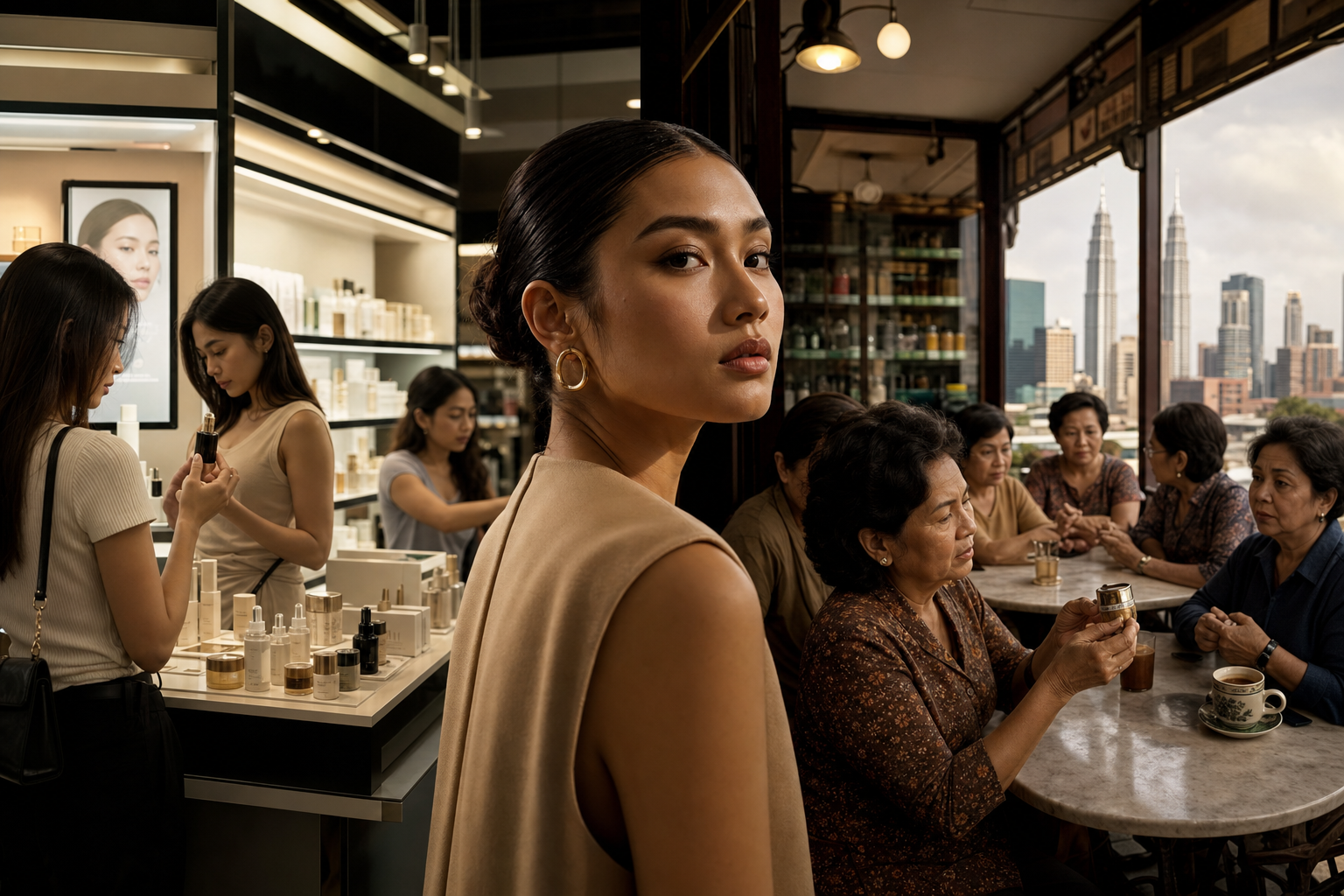
Picture this: a kopitiam in Bukit Bintang, the kind with marble-top tables and teh tarik vapour hanging in the air — but this one has been taken over by YSL Beauty for the launch of their Malaysia TikTok Shop. It's the most Malaysian and most 2026 thing imaginable. Luxury fragrance sits next to kaya toast energy, and the whole thing is filmed, filtered, and shared before the coffee even cools.
That single moment tells you almost everything about where Malaysia's beauty industry is right now: it's loud, it's fast, and the rules are being written in real time. Brand managers who think this market still runs on mall counters and beauty magazine spreads are already behind.
The Digital Beauty Counter Has Officially Opened
YSL Beauty's Malaysia TikTok Shop launch with a Bukit Bintang kopitiam takeover wasn't just a clever PR stunt — it was a statement of intent. Premium global brands now understand that Malaysian consumers meet beauty on their own terms, in their own cultural spaces. The era of the sanitised department store counter is being supplemented, if not quietly displaced, by social commerce.
This shift is significant for anyone running or pitching a beauty brand here. Malaysian shoppers are increasingly discovering products through short-form video and making purchase decisions inside the same app. Sephora Malaysia has been navigating this dual-channel reality for a while, but mid-tier and local brands are now feeling the full pressure to show up natively on TikTok and Instagram Reels — not just repurpose their TV ad budgets.
For brands serious about creator-led commerce, working with a platform like Creamatch — Malaysia's managed creator content platform — is becoming less of a nice-to-have and more of a competitive necessity. Authentic, locally-rooted content simply converts better than polished brand copy in this market.
K-Beauty Arrives With Serious Shelf Ambitions
If there's one trend that feels genuinely structural rather than cyclical, it's the continued expansion of Korean beauty brands into Malaysian retail. HaruHaru Wonder's push into broader retail availability and the broader Korean beauty innovation landing in Malaysia signal that brands with strong science narratives — vegan formulas, clinically-tested actives, minimalist ingredient lists — are finding a genuinely receptive audience here.
Guardian Malaysia has been particularly sharp in capitalising on this. Recognised at the Retail Asia Awards 2026 for leadership in health, beauty, and wellness retailing, the pharmacy-beauty hybrid model is proving its staying power. Consumers want the credibility of a health-adjacent environment when they're spending serious money on serums and SPF. Watsons Malaysia is playing the same game, stocking an increasingly sophisticated range of Korean and Japanese actives alongside its traditional drugstore mix.
Local heritage brands like Safi and SimplySiti aren't standing still either. Their halal-certified positioning — always a genuine differentiator in this market — is being refreshed with cleaner packaging and ingredient-forward messaging that speaks the same language as the K-beauty crowd, just with a distinctly Malaysian identity.
The Safety Crisis That Brands Cannot Ignore
Here's the part of the conversation that's uncomfortable but essential: the Health Ministry's ban on Tati Skincare products for containing poisonous substances didn't just make news — it revealed a deeper problem. According to reports covered by NST Online, at least 40 women subsequently raised the alarm that the banned product was still being sold after the official prohibition. That's not a supply chain blip. That's a trust emergency.
For brand managers, this is the signal worth sitting with. Malaysian consumers are becoming more ingredient-literate, more screenshot-ready, and faster to mobilise online than at any previous point. The same social infrastructure that lets YSL Beauty fill a kopitiam with content creators in an afternoon is the same infrastructure that can amplify a product safety scandal within hours. As Free Malaysia Today and The Star have both demonstrated with their beauty coverage, consumer protection stories now travel at the same velocity as viral campaigns.
The Tati situation is a case study in what happens when regulatory process and retail reality are out of sync. Brands operating in Malaysia — local or international — need compliance workflows that match the speed of the market. Pulling a product offline or off shelves cannot take days when news travels in minutes.
There's also an opportunity here for established players. Sendayu Tinggi and Velvet Vanity, both operating in a space where consumer trust is everything, stand to benefit simply by being visible about their ingredient standards and certification processes. Transparency isn't just ethical — it's currently a competitive advantage.
What the Next Six Months Actually Look Like
The industry calendar gives us some useful anchor points. CosmoBeauté Malaysia & BeautyExpo 2026 returns to KLCC with a renewed B2B focus, signalling that the industry's infrastructure investment cycle is still very much alive. That's where distribution partnerships get made and where the next wave of international brands will scout for local retail footholds.
Meanwhile, fragrance is quietly becoming the premium beauty category to watch. Global reports on the top fragrance trends for 2025 into 2026 point toward personalisation and layering — a behaviour Malaysian consumers, already comfortable with customising their food orders, are primed to adopt enthusiastically.
For brand and marketing professionals tracking all of this in real time, the Verbrol Pulse dashboard aggregates social and news signals across Malaysia's beauty and lifestyle verticals — useful when you need to know whether a trend is actually landing with local audiences or just circulating in international trade press.
Three things worth acting on before the quarter ends:
- Audit your compliance trail. The Tati incident is a warning. Know exactly how quickly you can pull product from every channel you sell through.
- Invest in creator-native content, not just creator seeding. The YSL kopitiam moment worked because it was built for the format, not adapted to it. Platforms like Creamatch exist precisely to help brands brief and manage this kind of work at scale.
- Own your ingredient story. Whether you're a local halal brand or an international K-beauty import, Malaysian consumers in 2026 want to know what's in the bottle and why it's there.
Malaysia's beauty industry has never been more dynamic — or more demanding. The brands that will win the next cycle aren't necessarily the ones with the biggest budgets. They're the ones paying closest attention.
Track Beauty trends in real-time at verbrol.com
Read more on Verbrol Intelligence: