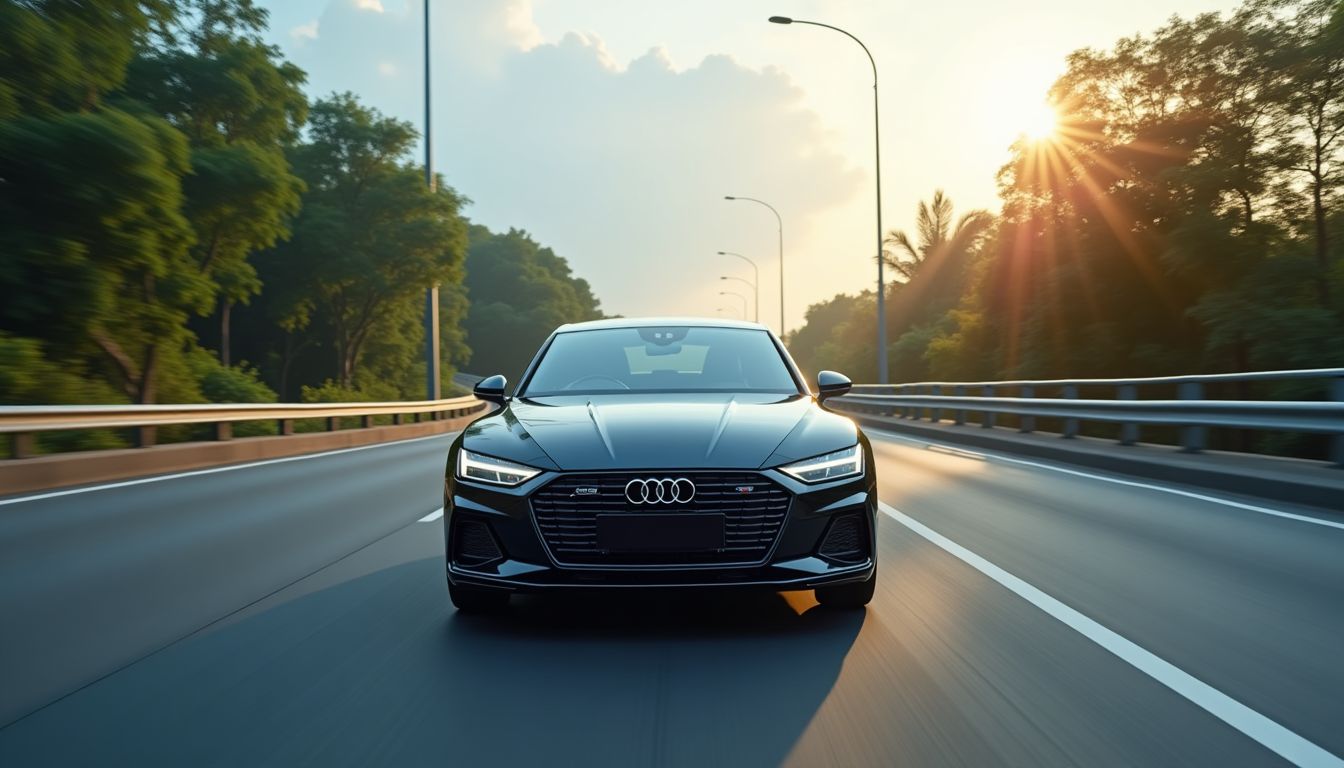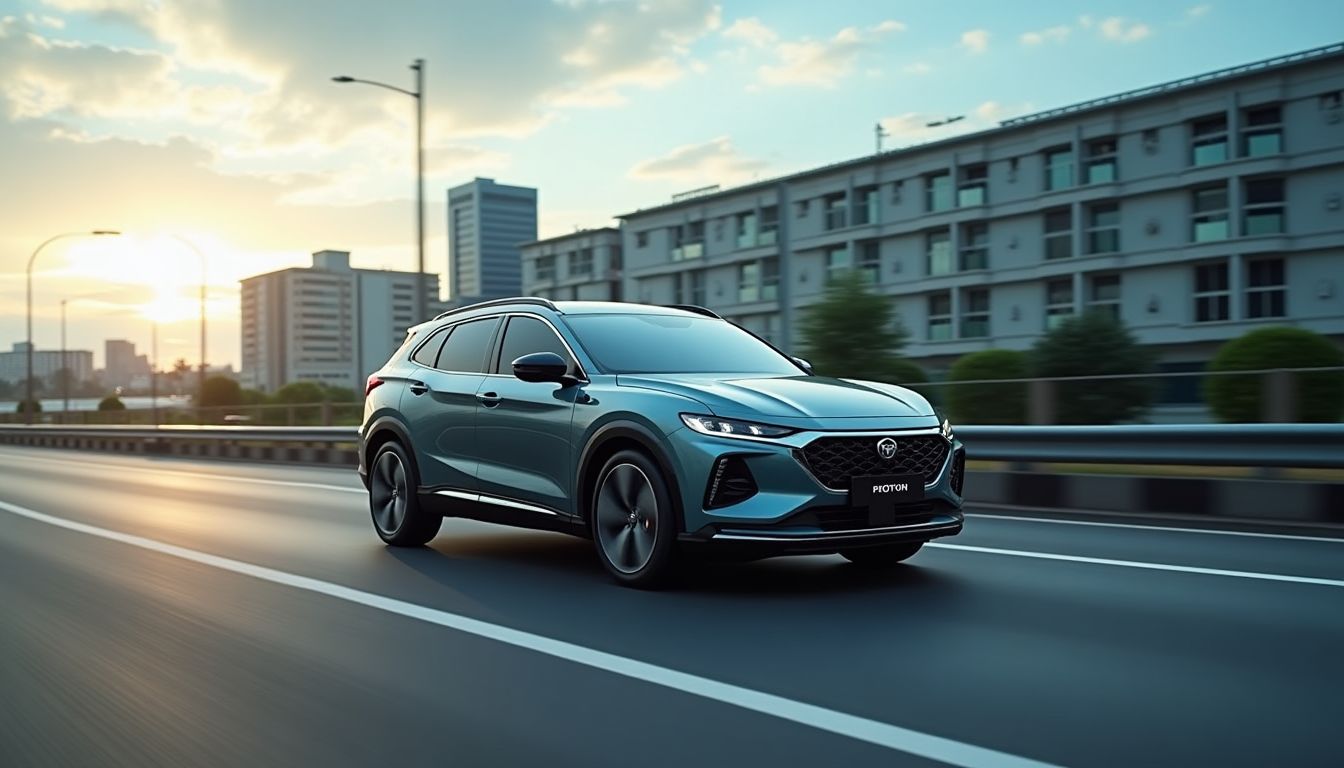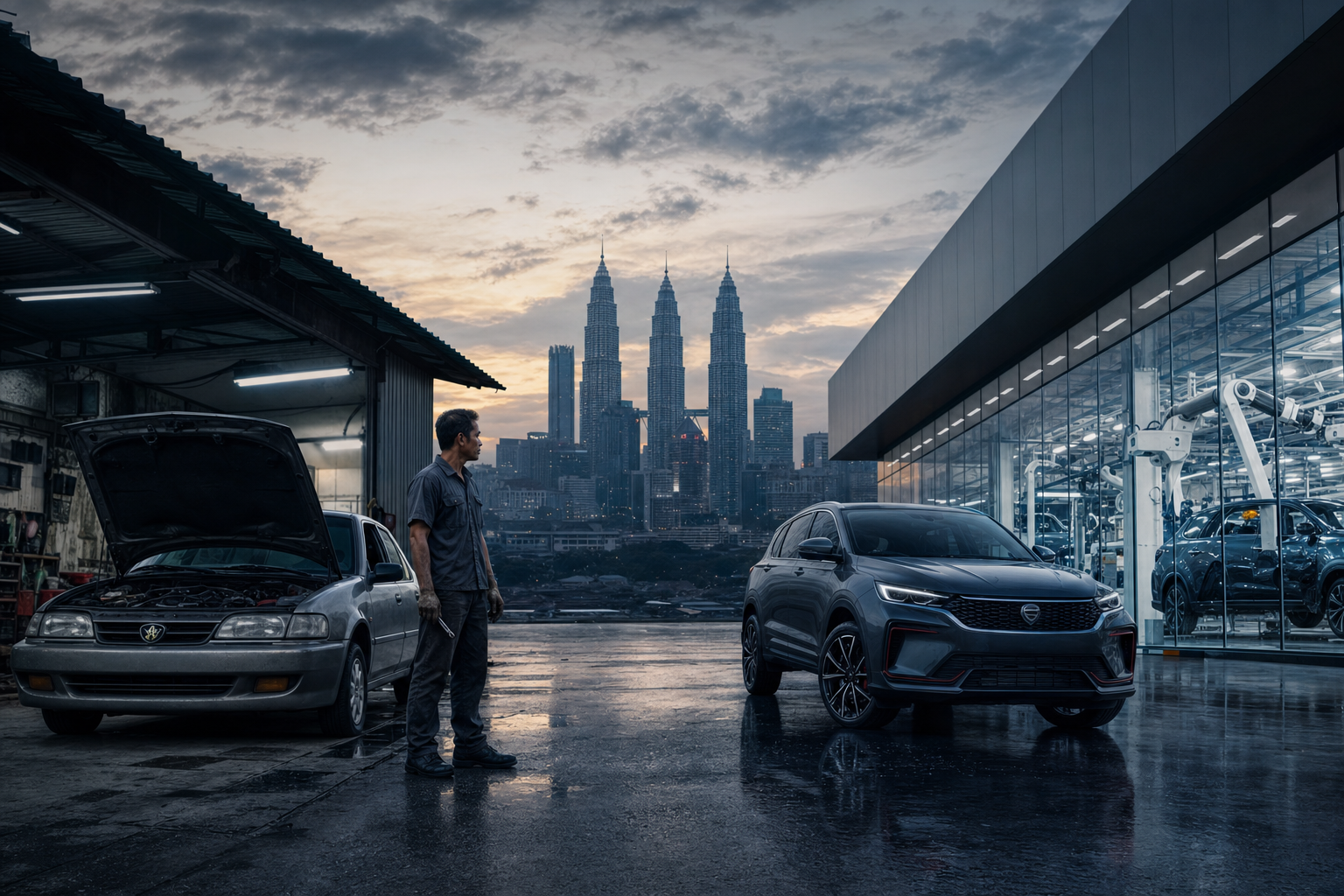
Proton has doubled its sales and launched 34 new models since partnering with Geely. Perodua is about to enter the EV space. And Chinese brands have gone from nearly invisible to structurally significant — all within three years. Malaysia's auto industry is not stagnating. It is being rebuilt, model by model.
It was a Wednesday evening in Kuala Lumpur when a colleague mentioned, almost casually, that his next car might be a Chery. Three years ago, that sentence would have drawn blank stares. Today, it barely raises an eyebrow. That shift — quiet, structural, and accelerating — is precisely what makes Malaysia's auto industry one of the most interesting industrial stories in Southeast Asia right now.
Proton's Geely Era Is Producing Measurable Results
The numbers from Proton's partnership with Geely deserve to be read carefully, not celebrated reflexively. Since the tie-up took effect, Proton has launched 34 new models, expanded its showroom network by 146 locations, recorded a 10x quality improvement by internal benchmarking, and — most significantly — achieved a 144% climb in sales from its 2018 all-time low to a 15-year high. That is not incremental recovery. That is a structural reset.
The Proton Saga MC3 delivered 8,207 units in April 2026 alone, a 50.9% jump over March, bringing the year-to-date figure to 29,977 units — up 42.8% year-on-year. For a nameplate that many had written off as legacy inventory, those figures carry a pointed message about what product investment and manufacturing discipline can produce when directed by a capable technology partner.
Looking ahead, Proton's product pipeline continues to expand. The AMA02 — a Saga Cross positioned as an A-segment SUV to compete directly with Perodua's Ativa — is confirmed for production in Q4 2026 according to supplier disclosures. Further models designated AMA05 and AMA06 are in planning, alongside a next-generation GMA electric vehicle. Facelifted versions of the S70 and X90 are also expected imminently. This is not a brand consolidating its position. It is a brand pressing an advantage.
The picture is not entirely clean, however. Proton is currently in a legal dispute with a supplier over unpaid dues, a tension that surfaces periodically in high-growth manufacturing cycles and warrants monitoring by those tracking financial stability within the national supply chain.
Perodua's EV Entry: Priced for the Mass Market, Structured Differently
Perodua's electric vehicle debut, confirmed for 2025 and now moving into commercial reality, represents the more consequential structural development for Malaysian consumers in the near term. The anticipated pricing of around RM80,000 — with a battery leasing model rather than outright ownership — addresses two persistent barriers to EV adoption in Malaysia: residual value anxiety and concern over long-term battery degradation.
The battery leasing structure is architecturally significant. It separates the cost of the drivetrain asset from the vehicle itself, effectively lowering the entry price while transferring battery risk to the manufacturer or leasing entity. The trade-off is real: as NST Online has reported, Perodua's EV can be remotely locked out in the event of unpaid battery fees — a condition that will require consumer education and transparent contractual terms if it is not to become a reputational liability.
Perodua has also confirmed a collaboration with an international partner to develop this vehicle, though the partner has not been officially named. The deliberate pricing and structural design of the product suggest this is not a compliance exercise. It is a genuine attempt to make battery electric mobility accessible to the RM70,000–RM90,000 buyer segment — the same segment that has historically sustained Perodua's dominance.
For brand managers and marketers working in the mobility space, the EV communication challenge here is significant. Explaining battery-as-a-service to a market that is accustomed to owning its powertrain outright requires sustained, credible content — the kind of long-form creator-led explanation that platforms like Creamatch, Malaysia's managed creator content platform, are well-positioned to support at scale.
The Chinese Brand Incursion Is No Longer a Footnote
Four years ago, Chinese automotive brands held approximately 0.08% of the Malaysian car market. As of the most recent market data, that figure stands at 7.6%. The trajectory — from statistical noise to structural presence — has taken less than one product cycle to materialise.
The brands driving this share gain are not competing on prestige. They are competing on specification density per ringgit: large screens, advanced driver assistance systems, over-the-air update capability, and competitive warranties, delivered at price points that established players have historically not needed to defend. The Malaysian Vehicles Market data for 2026 confirms this as a durable shift rather than a promotional spike.
The implication for Toyota Malaysia, Honda Malaysia, and Mazda Malaysia is not existential — their service network depth, brand trust, and financing infrastructure remain meaningful advantages. But the competitive dynamic has changed. Feature expectations have been reset by Chinese entrants, and the Malaysian buyer is increasingly calibrated to a different value equation.
As The Edge Malaysia's analysis of the shifting tone in the automotive sector notes, calibrating the industry's response requires a delicate balance — protecting employment in the national automotive supply chain while permitting the competitive pressure that drives genuine improvement.
The EV That's Already in the Top Five
Before Perodua even launches, Proton has already demonstrated what a well-executed EV entry looks like in Malaysia. The Proton e.MAS 5 has become the first electric vehicle to break into Malaysia's top five bestselling cars, capturing nearly 50% of the country's EV market in the process — a figure reported by Pro-Net and The Edge Malaysia. That is not a niche performance. That is mainstream market penetration.
The e.MAS 5's success carries a direct lesson: EV adoption in Malaysia responds to competitive pricing, brand credibility, and a usable charging ecosystem — not to aspiration alone. It also demonstrates that the Geely technology platform, applied through Proton, has genuine commercial viability in this market, which strengthens the case for Proton's forthcoming GMA-based EV.
For those tracking structural readiness beyond individual models, PwC's analysis of semiconductor integration in Malaysia's automotive sector provides useful framing — the vehicle itself is increasingly a software and silicon product, and supply chain strategy must reflect that.
What Brand Managers Should Be Watching
Malaysia's auto sector is moving across three simultaneous transitions: the electrification of its national brands, the competitive repricing of the mid-segment by Chinese entrants, and the structural question of what the industry produces — and where — beyond final assembly. That last point is precisely what Malaysia's deputy minister flagged when calling for the sector to shift gears beyond assembly — a strategic ambition that will require sustained policy commitment and private sector investment in R&D, not just in final vehicle production.
For marketers and brand strategists working in or adjacent to this sector, the actionable priorities are clear:
- EV communication is an education brief, not a launch brief. Battery leasing, charging infrastructure, and total cost of ownership all require explanation before they produce purchase confidence. Plan content accordingly.
- The Chinese brand threat is a specification threat first. Responding to it on price alone is insufficient. Established brands need to sharpen their articulation of trust, serviceability, and long-term ownership value.
- Proton's product offensive is real and accelerating. The pipeline — AMA02, AMA05, AMA06, next GMA EV — means competitive pressure on the national segment will intensify through 2027. Adjacent brands and suppliers should be planning for that market.
- Track the supply chain story. Proton's supplier dispute and Perodua's international development partnership are both indicators of the complexity beneath the headline sales figures. Bernama and The Star both carry consistent coverage of these second-tier developments that reward monitoring.
Malaysia's auto industry in 2026 is not a comfortable story of managed growth. It is a sector under genuine competitive pressure, making consequential decisions about electrification, product architecture, and industrial identity — simultaneously. The brands and marketers who understand the structural logic underneath the launch headlines will be better positioned for what follows.
Monitor Malaysia's auto sector movements as they develop at Verbrol Pulse.
Track Auto trends in real-time at verbrol.com
Read more on Verbrol Intelligence: