Big appetites, fast trends, and borrowed brands — Malaysia's food scene is accelerating in ways that should make every marketer in the region pay close attention.
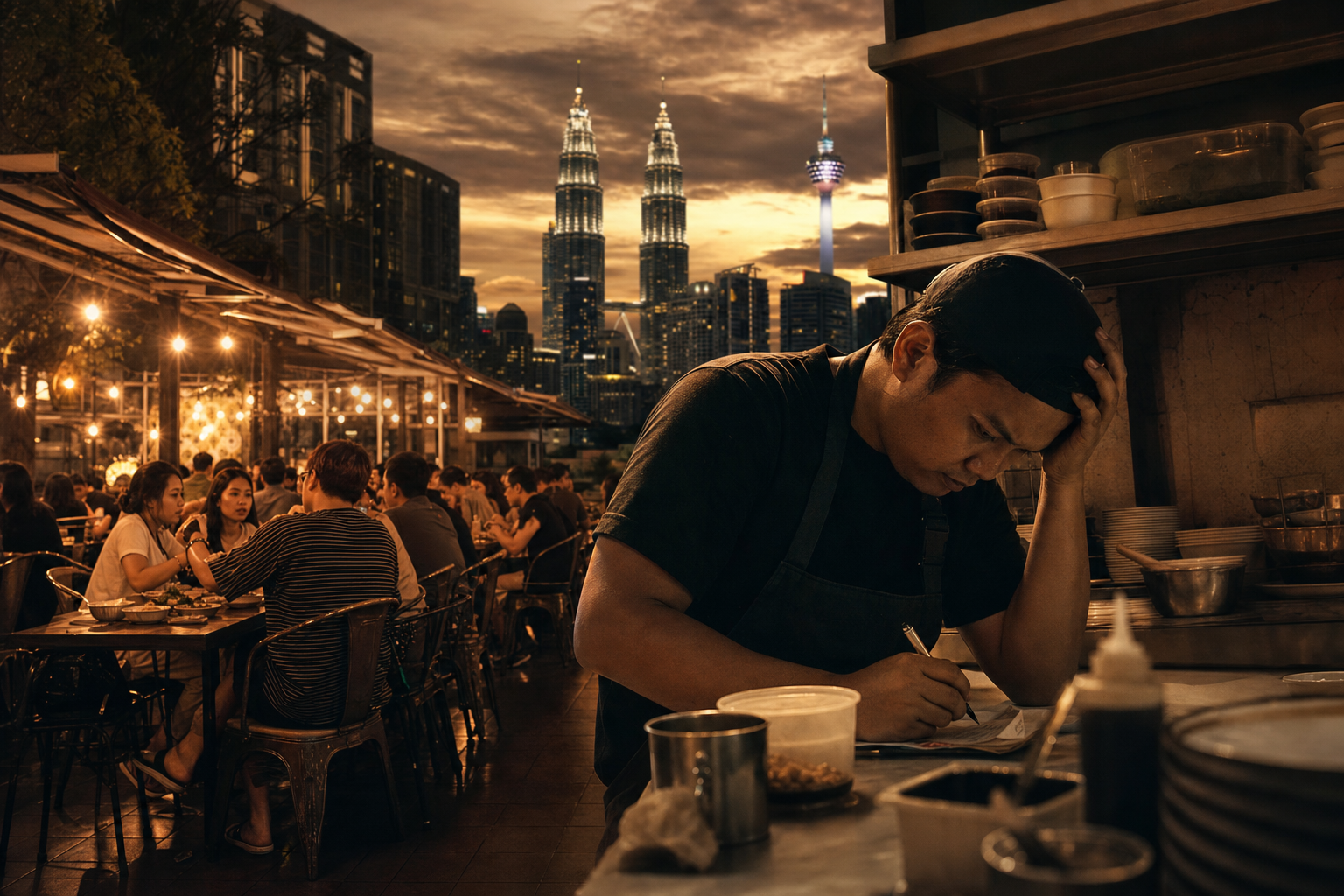
Malaysians decide what to eat by committee. Walk through any mamak stall on a Tuesday night and you will hear it — someone opens TikTok, someone else argues that the nasi lemak from three streets over is better, and the table makes a collective decision in under four minutes. That social velocity is the engine driving Malaysia's F&B market right now. It is also, increasingly, the source of its biggest commercial headaches.
Spending the last 48 hours watching what Malaysians are actually discussing about food — across YouTube comments, Malay-language news portals, and regional trade media — produces a picture that is messier, more interesting, and more commercially urgent than most brand decks acknowledge.
The Chikuro Moment: When Viral Borrowing Becomes a Brand Crisis
The highest-engagement food conversation circulating in the region right now has nothing to do with a Malaysian brand. It concerns Chikuro, an Indonesian chicken roll brand from Bandung, which found its name being used by Malaysian sellers without authorisation. A single YouTube video on the dispute pulled 127 interactions in under 48 hours — with a secondary thread on trademark versus patent distinctions reaching 463 engagements, suggesting the audience is not just angry, it is educating itself.
The comments are worth reading carefully. Indonesian and Malaysian users alike are parsing the difference between a brand name and a product category — "Jual Chicken Roll ❌ Jual Chikuro (merk) ✅" as one commenter put it, drawing the KFC analogy. This is not a niche IP debate. It is a signal that Southeast Asian food consumers are becoming literate about brand ownership in a way that marketers have not fully absorbed.
For Malaysian F&B brand managers, the operational lesson is direct: the speed at which a viral Indonesian food format crosses the Causeway and appears on local menus has shortened to days, not months. The window to establish a legitimate licensing or partnership arrangement — before informal copying triggers a public dispute — is now extremely narrow. Platforms like Creamatch, which connects brands with managed creator content in Malaysia, are seeing exactly this pattern: Indonesian food concepts going viral on Indonesian creator channels, then appearing organically in Malaysian consumer feeds before the originating brand has any regional presence.
Trend Velocity: Pistachio Today, What Tomorrow?
On the domestic side, Malaysian food media is reporting on what can only be described as a pistachio panic — matcha and pistachio combinations appearing across nasi lemak, catfish dishes, and fried chicken menus simultaneously. The Malay press is covering it with mild bewilderment, noting that the additions are less about flavour logic and more about social media optics.
This is the FOMO-driven menu cycle that mature F&B markets recognise immediately. A commenter in one of the most-watched threads said it plainly: "Banyak tau makanan yang rame di sosmed bukan karena enak, tapi karena orang-orang pingin nyobain yang lagi tren" — most people who know about viral food know it not because it is good, but because everyone wants to try what is trending.
For brands operating at scale — ZUS Coffee, which just opened its first Indonesian outlet and is now being watched closely from both sides of the Strait, or Tealive managing a regional portfolio — the challenge is deciding which trends to absorb into permanent menus versus which to deploy as limited-time offers with a defined exit. The brands that handle this well build customer anticipation. The ones that handle it badly end up with a pistachio catfish that nobody orders in August.
The Grab 5-Star Eats Awards 2025 currently running in Malaysia is a useful barometer here: consumer voting in categories like Best Nasi Lemak reveals which formats have genuine loyalty versus which are trending on recency alone.
Institutional Money Is Entering — the Infrastructure Is Being Built
While the social conversation is loud and fast, the structural story underneath it is slower and more significant. India Gate is targeting 30 branches across Malaysia within two years, concentrating on Johor and Penang — both states that function as natural corridors between Malaysian and Singaporean or Indonesian consumer bases. This is not a vanity expansion; it is a franchise infrastructure play timed to demographic shifts in Indian-Malaysian dining preferences.
At the same time, Sagtec Global's acquisition of a 40% stake in Malaya Heritage Holding signals something different: technology infrastructure is being layered into traditional F&B heritage businesses. This is the quiet end of Malaysia's food modernisation — less visible than pistachio nasi lemak, but more consequential for operators managing supply chains and customer data.
Malaysia's trade exhibition calendar reinforces this institutional momentum. MIFB remains the anchor event for regional F&B business development, and KUSKOP's RM20 million sales target from THAIFEX-Anuga Asia 2026 tells you where Malaysian government trade attention is pointing: outbound, into ASEAN, with food as a leading export category.
For context on just how significant food tourism has become to this equation, Tourism Malaysia has increasingly positioned the country's culinary diversity as a primary inbound draw — which means the reputational stakes of a public food-origin dispute, like the Pagi Sore restaurant controversy circulating in Indonesian media this week, extend beyond brand damage into destination perception.
What Brand Managers Should Actually Do With All This
Three things stand out after watching 48 hours of regional F&B signals.
First, trademark is now a social media issue, not just a legal one. The Chikuro dispute is being litigated in YouTube comment sections, not courtrooms. Malaysian brands importing or adapting regional concepts — from Indonesian street food to Vietnamese coffee formats — need legal groundwork done before the first creator post, not after the first controversy.
Second, the trend cycle is genuinely accelerating. The gap between "this is viral in Jakarta" and "this is on a menu in Petaling Jaya" is now measurable in days. Brands like Old Town White Coffee and Secret Recipe, which operate on slower product development cycles, need trend monitoring built into quarterly planning rather than annual reviews. Verbrol Pulse tracks exactly this kind of cross-border signal movement for F&B operators in the region.
Third, creator content is the new field sales. ZUS Coffee's Indonesian launch is being discussed on Malaysian YouTube channels before most trade journalists have filed a single story. The brand's regional awareness is being built by creators, not press releases. For F&B marketers managing multi-market rollouts, working with a structured creator content partner like Creamatch — which handles managed creator campaigns across Malaysia and the broader SEA market — is no longer optional infrastructure. It is the distribution layer.
Malay-speaking consumers across the region are paying attention to food provenance, brand authenticity, and trend credibility in ways that reward brands who are honest and punish those who are opportunistic. That is a harder market to navigate than five years ago. It is also a more interesting one.
Track F&B trends in real-time at verbrol.com
Read more on Verbrol Intelligence:
- Malaysia's F&B Identity Is Being Tested — And Brands Are Watching
- Your F&B Brand Is One Viral Moment Away From a Crisis (or a Comeback)
- Malaysia's F&B Scene Is Borrowing Everything — And That's the Problem
Related Reading
- Malaysia's F&B Scene Is Borrowing Everything — And That's the Problem
- Kenapa Restoran Popular Malaysia Habis Dalam Sejam Tapi Ribuan Lagi Tutup Tiap Tahun?
- F&B Malaysia 2025: Viral Bukan Strategi, Ia Adalah Perangkap
Frequently Asked Questions
What is the Chikuro trademark dispute about? Chikuro is an Indonesian chicken roll brand from Bandung that discovered Malaysian sellers were using its name without authorization. The dispute went viral on YouTube, with over 600 combined engagements as Malaysian and Indonesian consumers discussed the difference between brand names and product categories.
Why are Malaysian F&B brands facing commercial challenges right now? Malaysian consumers make food decisions collectively and very quickly through social media platforms like TikTok, creating rapid viral trends. This social velocity means brands must constantly innovate and respond to trending competitors, making it harder for established Malaysian brands like Tealive, ZUS Coffee, and Secret Recipe to maintain their market position.
How do Malaysians decide where to eat? Malaysians typically make dining decisions as a group, with people sharing recommendations via TikTok and other social platforms before collectively agreeing on a restaurant within minutes. This committee-based decision-making process is driven heavily by social media influence and viral trends.
What does 'viral borrowing' mean in Malaysia's F&B industry? Viral borrowing refers to when consumers and sellers adopt popular food brand names or concepts without authorization, riding on a brand's viral success. The Chikuro case illustrates how this unauthorized copying can become a significant commercial and legal issue for both established and emerging food brands.